I've bought, fitted, and returned more no-pull harnesses than I want to admit.
Cooper made sure of that. Eighty pounds, sweet as anything, and completely certain he belongs six feet ahead of me.
Most of them failed on at least one of these three things:
They didn't actually stop the pulling.
They choked him, or rubbed him raw under the front legs.
Or they took two minutes and a sore back just to get on.
(Wrestling an excited dog at the door every morning? Yeah, no thanks.)
Only one delivered on all three.
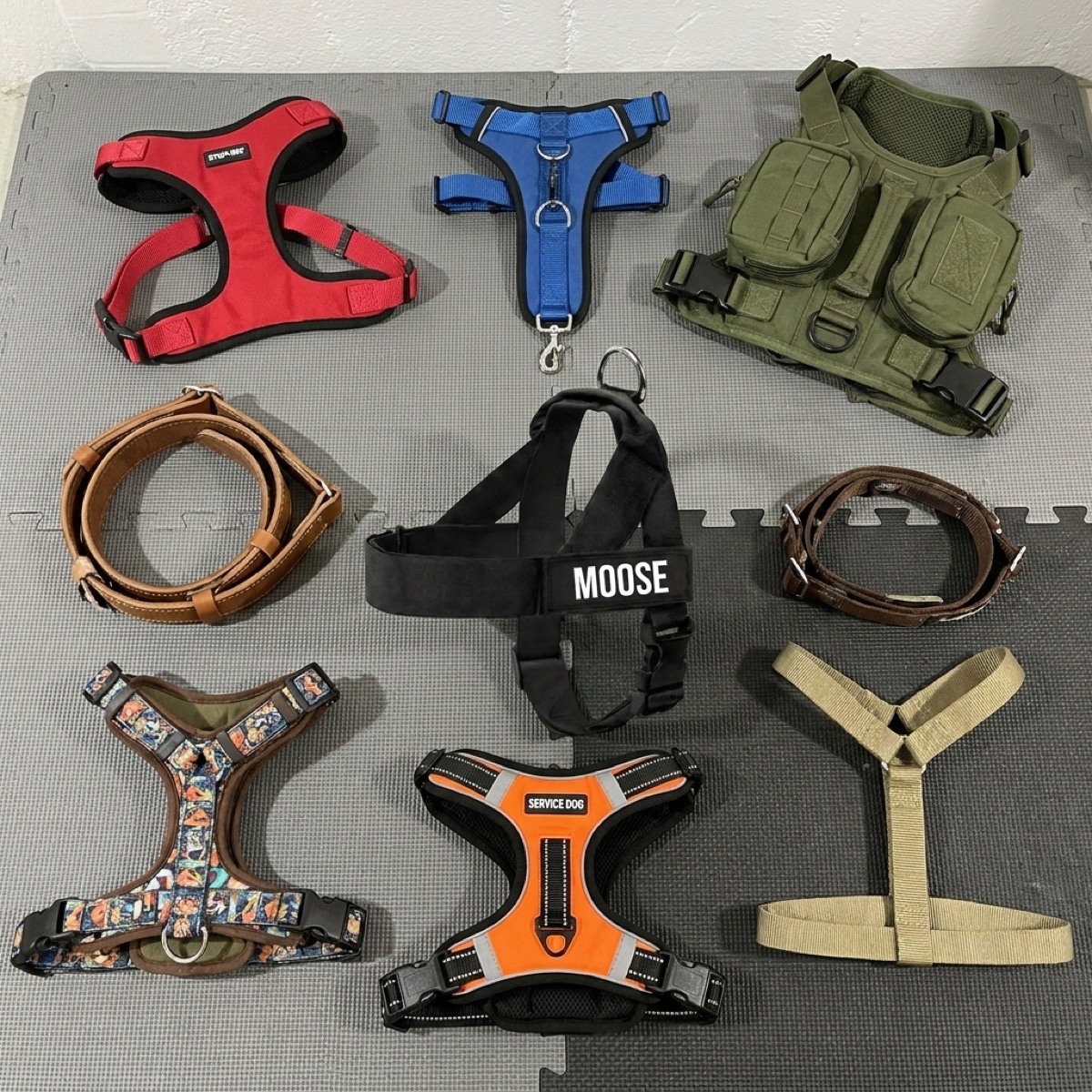
Here's what I was judging on — and how they stacked up.
What I Actually Looked For
✅Stops the pulling on the first walk — not after six weeks of training
Here's what I didn't understand for years: a harness that clips at the back is built to make her pull. Push against a dog and instinct says push back harder — it's the same reflex sled dogs are bred for. So every time she surges, the leash pulls back on her shoulders, her body reads resistance, and she leans in harder.
That's not a defective harness. That's the exact design used to train dogs to pull.
Move the ring to the chest and it flips — a lunge stops meeting resistance and turns her back toward you instead. No training program required. So a steel ring at the chest was non-negotiable for me.
✅On in one motion — no wrestling match at the door
Cooper hates having his paws lifted. Threading two legs through two holes while he spins and backs away made every morning a fight before we'd even left the house.
One strap over. One buckle. Out the door in seconds — with a dog who still gets excited when he sees the leash.
✅Nothing that chokes. Nothing that rubs.
I can live with a sore arm. I couldn't live with hurting him to fix it.
And that's the trade most no-pull gear quietly asks you to make. Something tightens across his throat and he coughs the whole way home. A strap runs through his armpit and a month later you find the bald patch, skin already raw underneath.
I wanted the pulling to stop without paying for it in his body.
Exactly one harness cleared all three.
Here's the breakdown:
#1 — PawlyLab Co No-Pull Harness
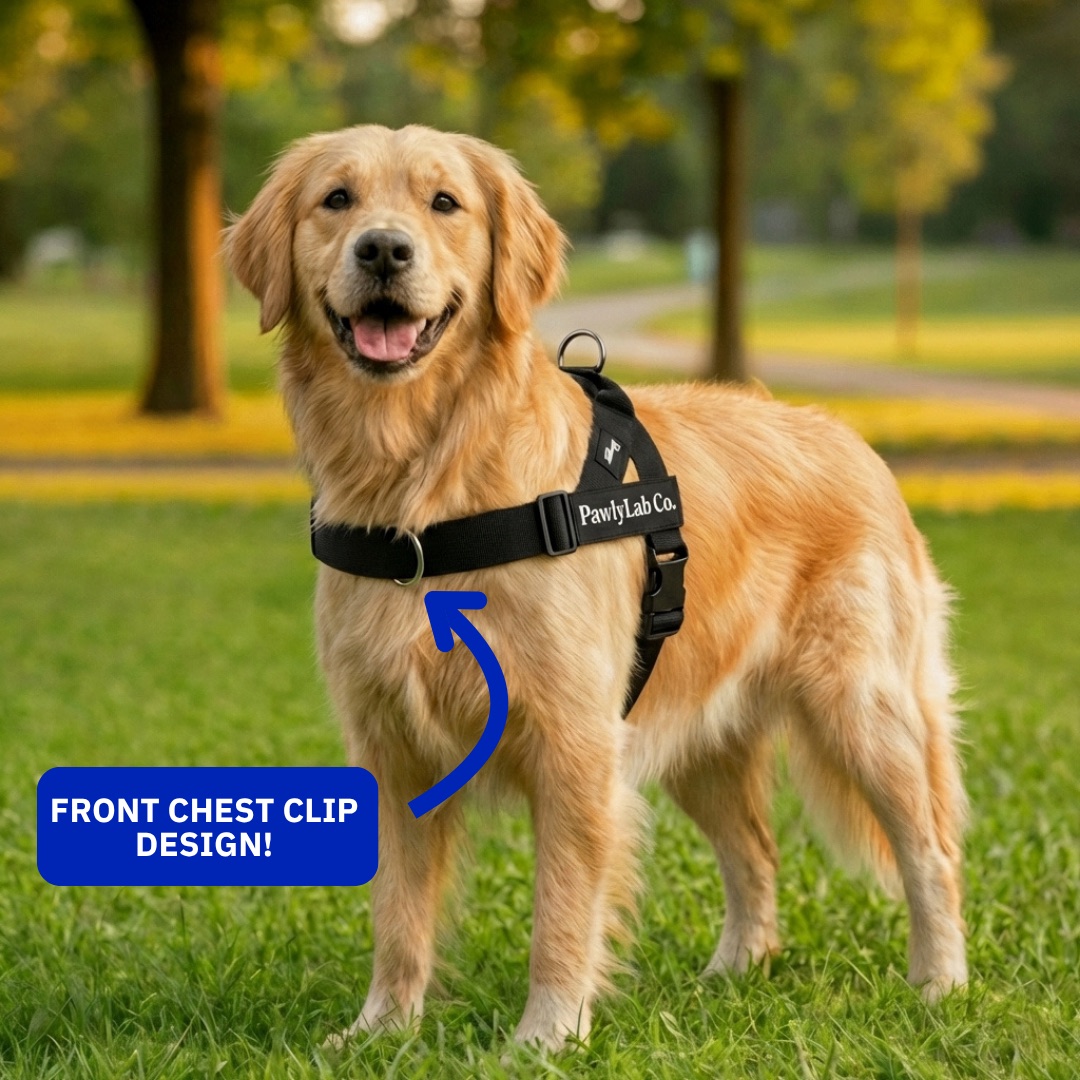
🏆 Best Overall No-Pull Harness of 2026
Price: ~$39–$69
The only harness here that scored 3 for 3.
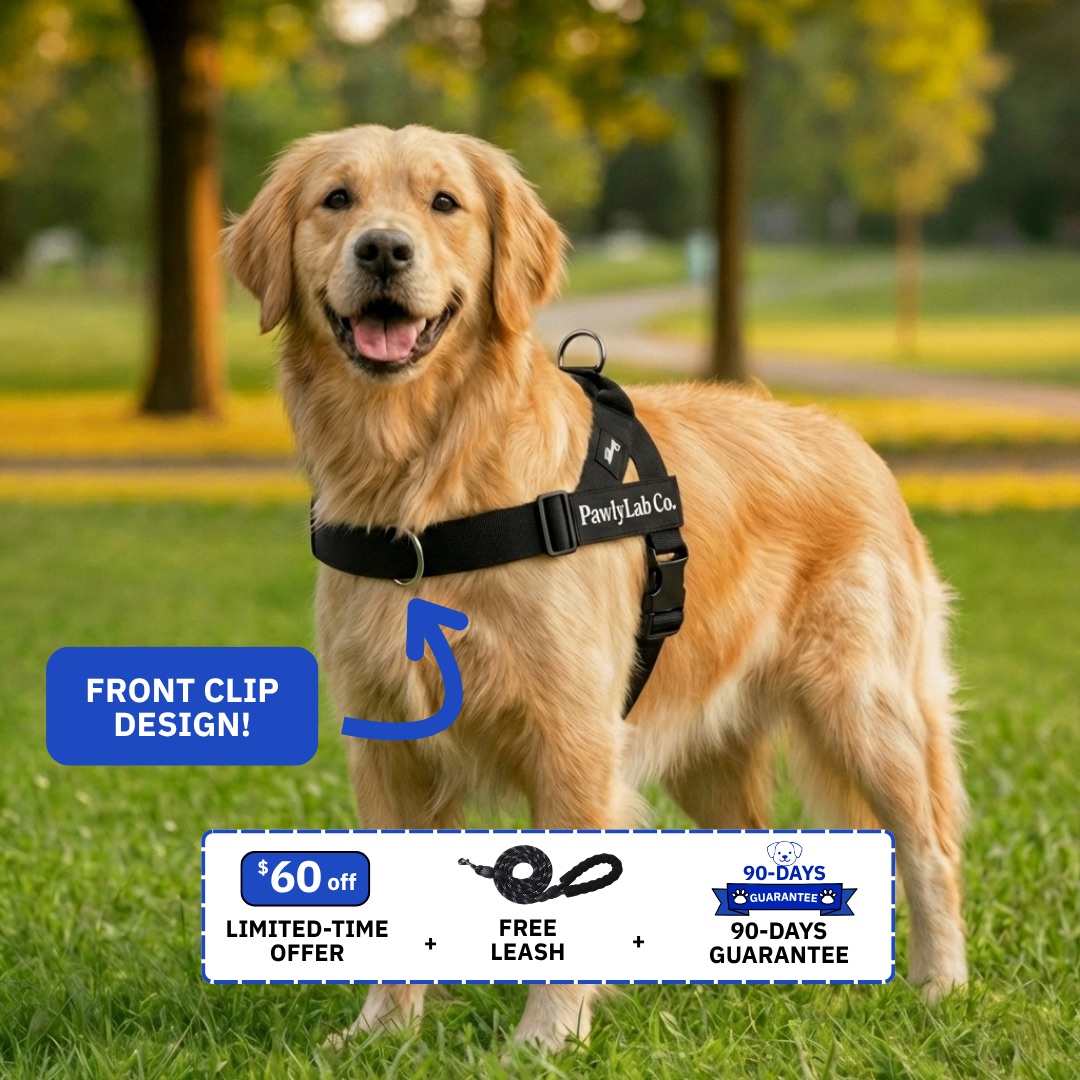
The difference is the front chest ring. Everything else on this list hangs the leash off the back — the design that builds pulling. PawlyLab puts a steel D-ring at the chest, where a lunge becomes a turn instead of a tug-of-war.
I'll be honest about why that mattered so much to me. Last March, Cooper spotted another dog across the street and I went down on the sidewalk, two houses from my own driveway. Sprained wrist, torn coat, and a neighbor running over to ask if she should call someone. I was fine. But I let my husband do the walks for three weeks after that — and that's the part nobody warns you about. A pulling dog doesn't just make you sore. It quietly takes your own dog away from you.
First walk with the front ring, Cooper hit the end of the leash once, felt himself turn sideways, and came back to my hip. He never tried again. I wasn't training him. It just stopped working for him.
Nothing chokes, nothing rubs. The Norwegian Y-cut rests on the breastbone and leaves the throat wide open — no coughing, no gagging. And the body strap sits well behind the front legs, so it never saws into the armpits. A year of daily walks, and the coat under that strap looks like the coat everywhere else.
On in about two seconds. One strap over, one buckle at the side, done. No lifting paws, no bending over a wiggling dog, no fight at the door. Cooper stands still for it now — he figured out it takes a second and then we're walking.
Front AND back ring — and the leash is included free. Front for pull-control days, back once she's walking calmly. You never buy a second harness.
Metal hardware instead of plastic. Free US shipping, free size exchange, and a 30-day money-back guarantee.
If pulling is ruining your walks, this is the one.
#2 — Ruffwear Front Range
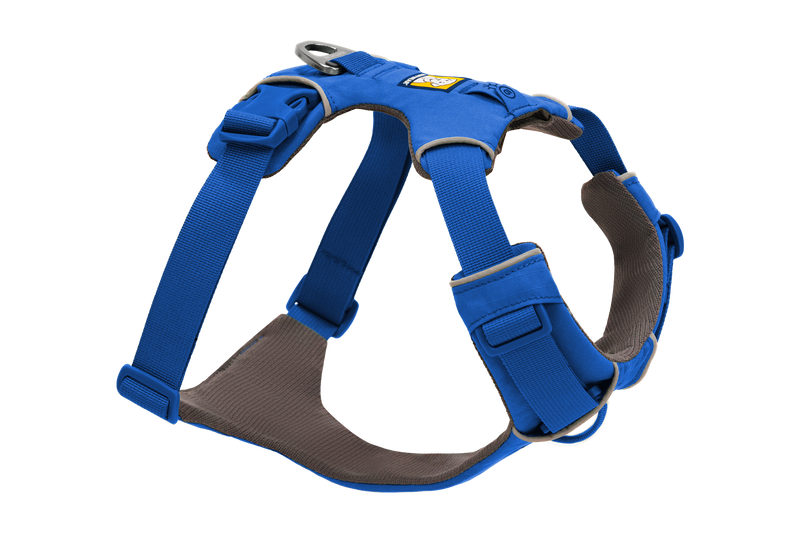
Price: ~$45–$55
Genuinely lovely gear — padded, well cut, still looks new after two winters.
Pros
Cons
Verdict: Beautifully made — for a dog who already walks nicely. Which is the one dog who doesn't need it.
#3 — PetSafe Easy Walk
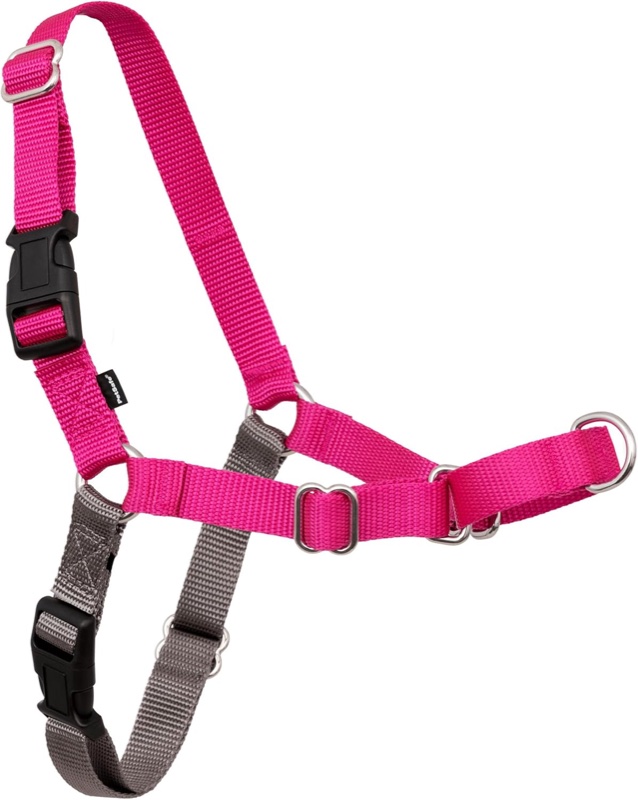
Price: ~$25–$35
The one most trainers hand you first, and it does move the leash to the front.
Pros
Cons
Verdict: It stops the pulling. It also stops the shoulders. Ask a canine physio what a year of that costs her.
#4 — Rabbitgoo No-Pull Harness
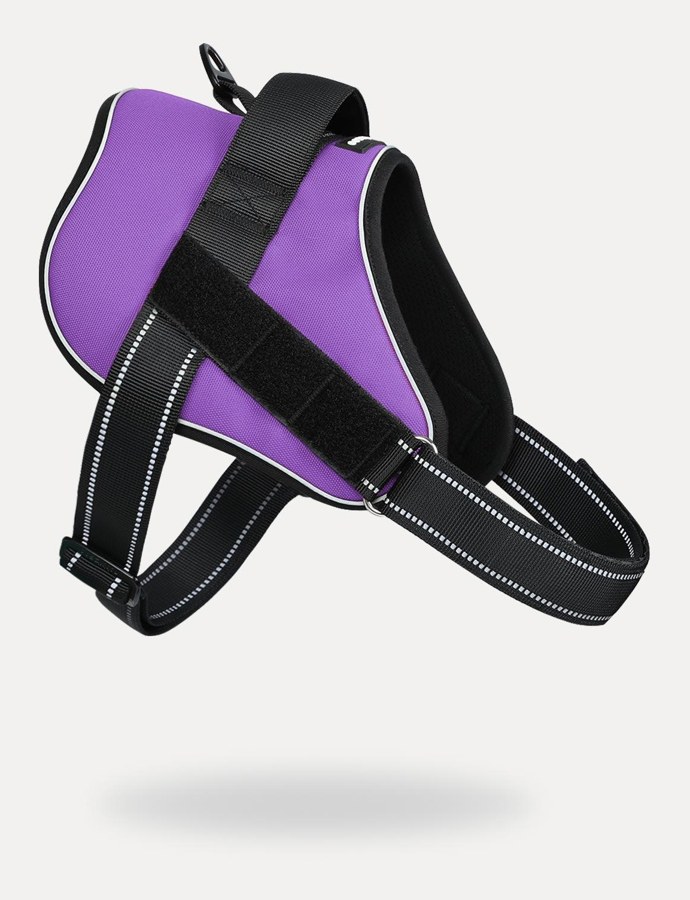
Price: ~$20–$30
The Amazon bestseller. Two rings, every color, very good price.
Pros
Cons
Verdict: The right idea on the cheapest possible hardware. It's the harness you replace, not the one you keep.
#5 — Step-In Harnesses
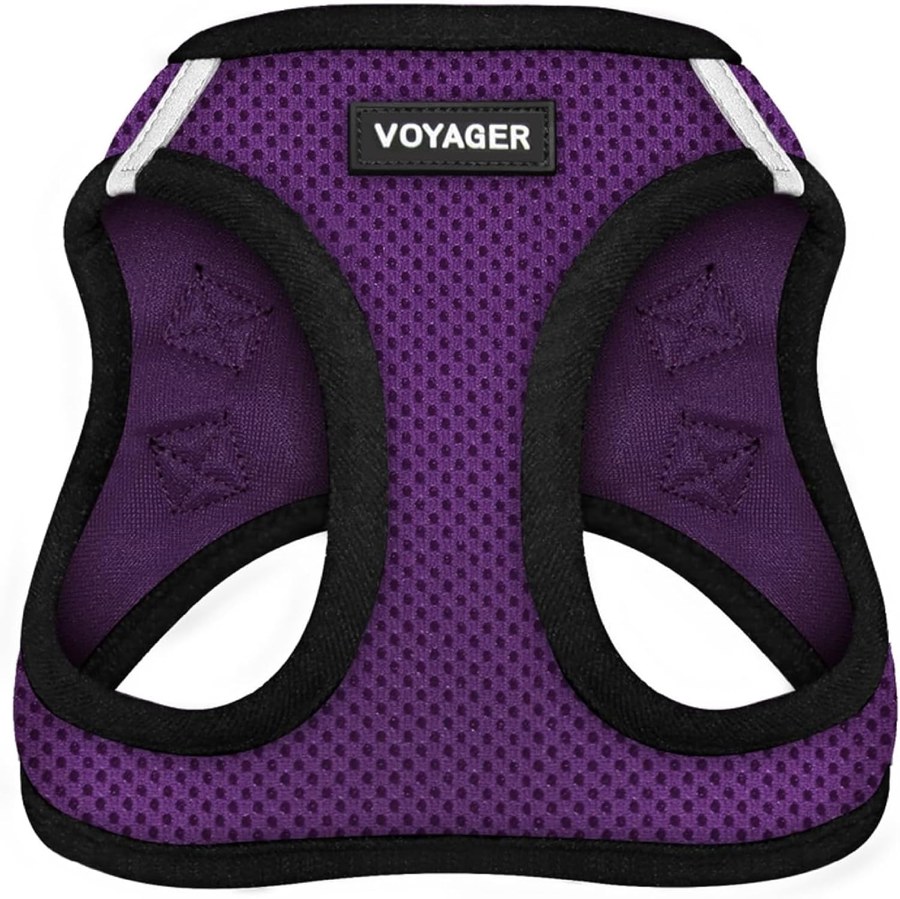
Price: ~$8–$15
The $10 step-ins on the marketplaces, sold under a dozen interchangeable names.
Pros
Cons
Verdict: For a puller, that's not $10 saved. It's $10 spent four times a year — and one bad afternoon from a loose dog in traffic.
Final Thoughts
Almost every harness sold is a back-clip harness. Some padded, some cheap, some expensive.
They all hang the leash off the one place that makes pulling worse.
Only one was built the other way around:
That's the PawlyLab Co No-Pull Harness.
The only one I'd hand another dog mom without a list of caveats attached.
And there's no risk in trying it: free leash, free shipping, free size exchange, 30-day money-back guarantee.
If you want the walk back — the one where you're not bracing and she's not coughing —
this is the one.