Best No-Pull Harnesses of 2026

We Compared The 3 Kinds Of No-Pull Harness. Only One Works With Your Dog’s Reflexes.
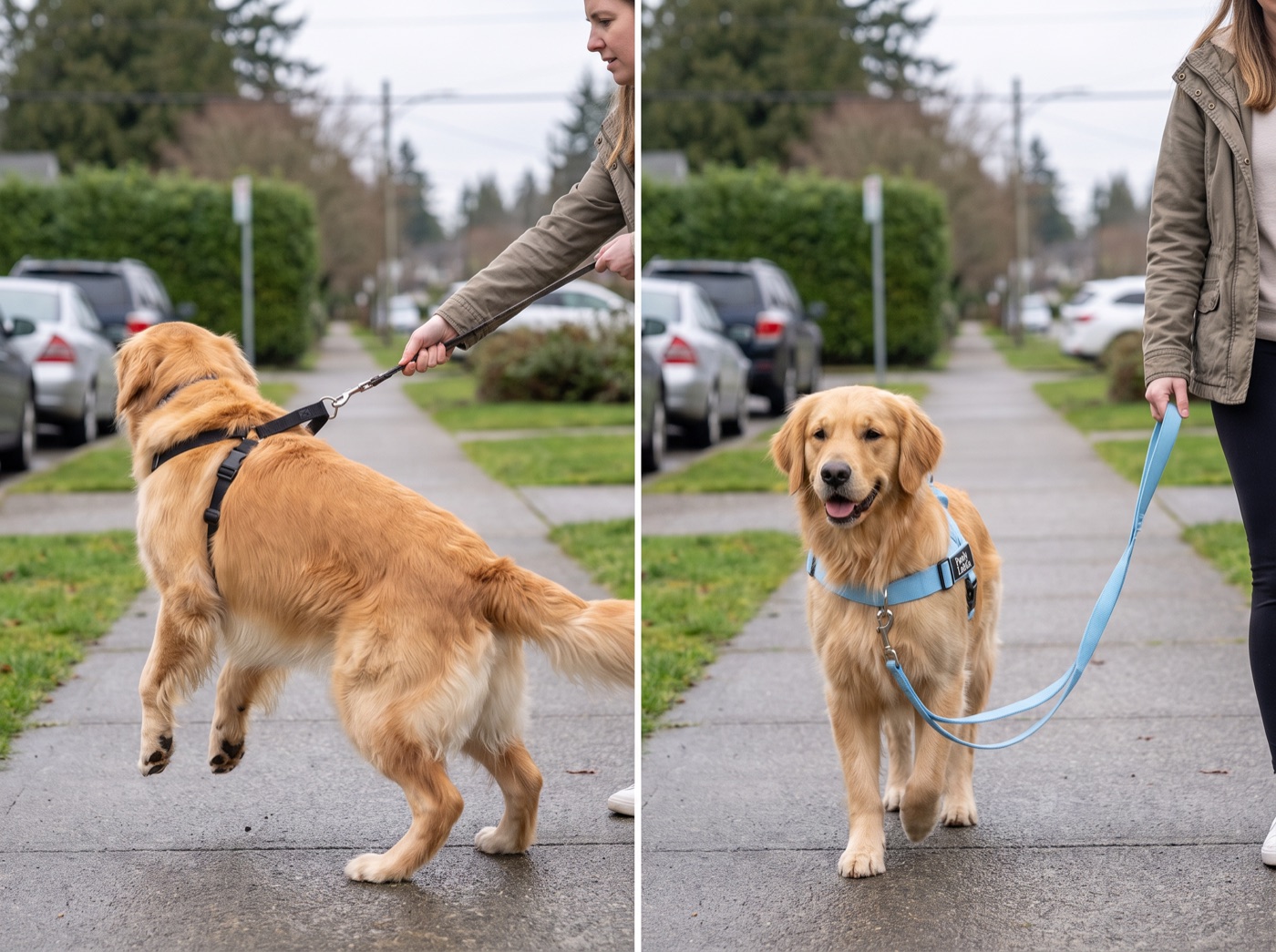
Picture this: it’s 7 AM. You have twenty minutes before work, the leash is already in your hand, and you are bracing your shoulder before you have even opened the front door. Not because your dog is aggressive. Because you know exactly what the first thirty seconds of this walk are going to feel like.
So you did what everyone does. You bought a harness. Then a different harness. Maybe a head collar that your dog spent the whole walk trying to rub off on your leg. Each one promised the pulling would stop, and each one changed the pulling by roughly nothing.
Here is the part nobody tells you: most of those products were never going to work, and it has nothing to do with your dog’s training. It is a reflex — and where the leash pulls from decides whether you trigger it or not.
The 3-Harness Comparison
There are only three real mechanisms on the market. Everything else is a variation of one of them. We compared them on the things that actually decide whether a walk is calm:
- Leash attachment point — back, chest, or head
- What the pressure tells the body to do — push into it, or turn
- Whether it works on the first walk or needs weeks of conditioning
- Tolerance — will the dog actually wear it without fighting it
- Pressure on the neck and throat
- What happens on a hard, unexpected lunge
We are not going to tell you we walked three dogs for a month. We are going to tell you what each mechanism does to a dog’s body, because that is the part that is predictable and the part you can check for yourself on your next walk.
What Actually Matters (Beyond the Marketing Hype)
Dogs have something called opposition reflex. Push a dog, and it pushes back. Pull a dog steadily forward from behind, and it drives forward into the pressure. This is not stubbornness or dominance. It is the same reflex that lets a sled dog pull a loaded sled for hours without being trained to.
A standard harness clips the leash on the dog’s back, between the shoulder blades — which is, almost exactly, where you would attach a sled. Every time your dog surges and you brace, you are pulling backwards against their chest. Their body reads that as resistance and answers by driving harder. You are not failing to correct the pulling. The equipment is quietly rewarding it.
Move the attachment to the chest and the physics invert. When your dog surges ahead, the leash pressure comes from in front of the shoulder, so the pull rotates them gently back toward you instead of bracing them forward. There is no reflex to fight, because nothing is pushing into their chest.
The third option, the head collar, works on a different principle: steer the head and the body follows. It is effective, and it is also the option most dogs object to most, which is why so many end up in a drawer.
So the real question is not which harness is strongest or best-reviewed. It is: does this design trigger the reflex, avoid it, or bypass it?
The Results: One Clear Winner, Two Expensive Lessons
Judged on mechanism rather than marketing, the three break down like this.
#1 Front-Clip Harness — the PawlyLabs No-Pull Harness
Price: see the current price at betterdoglife.com
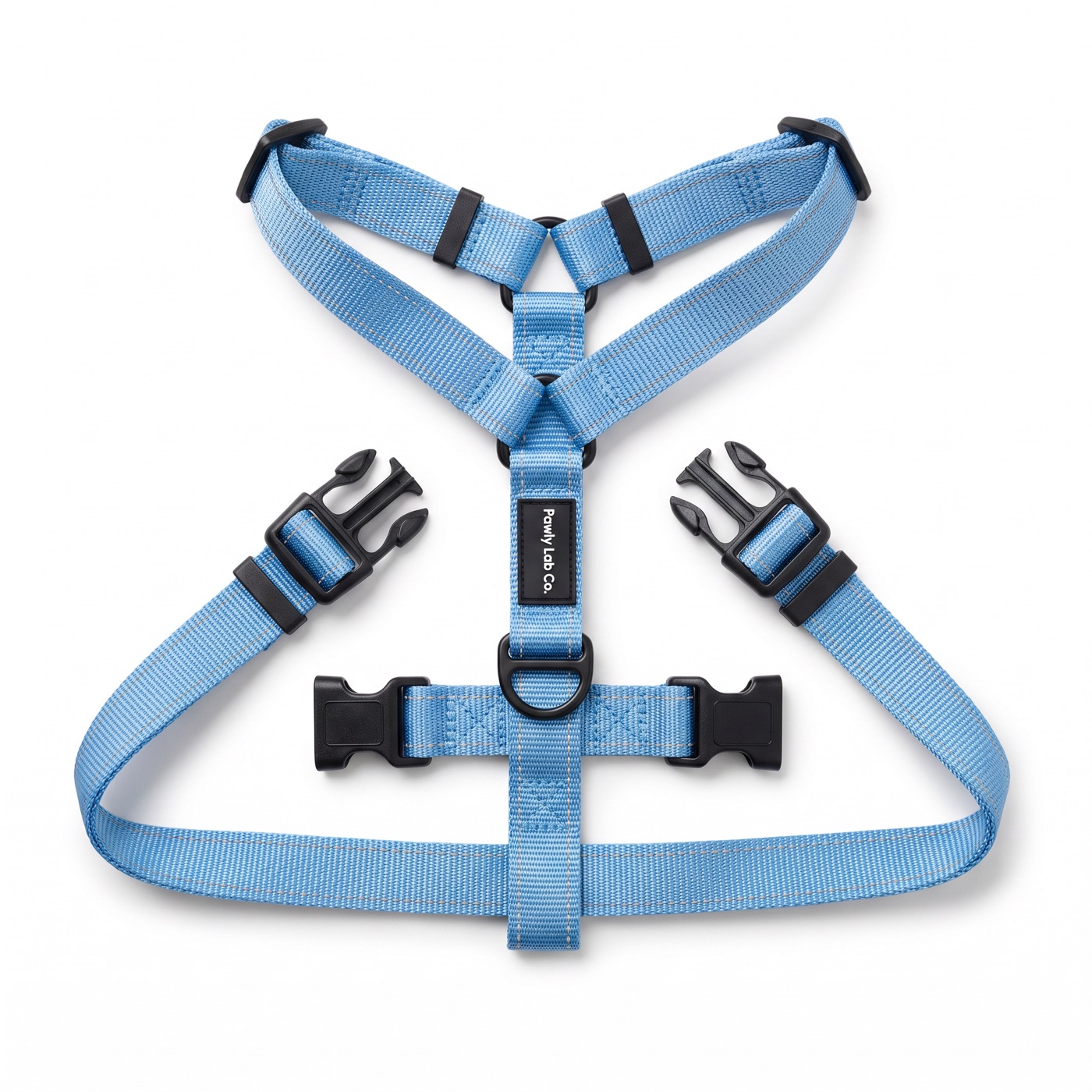
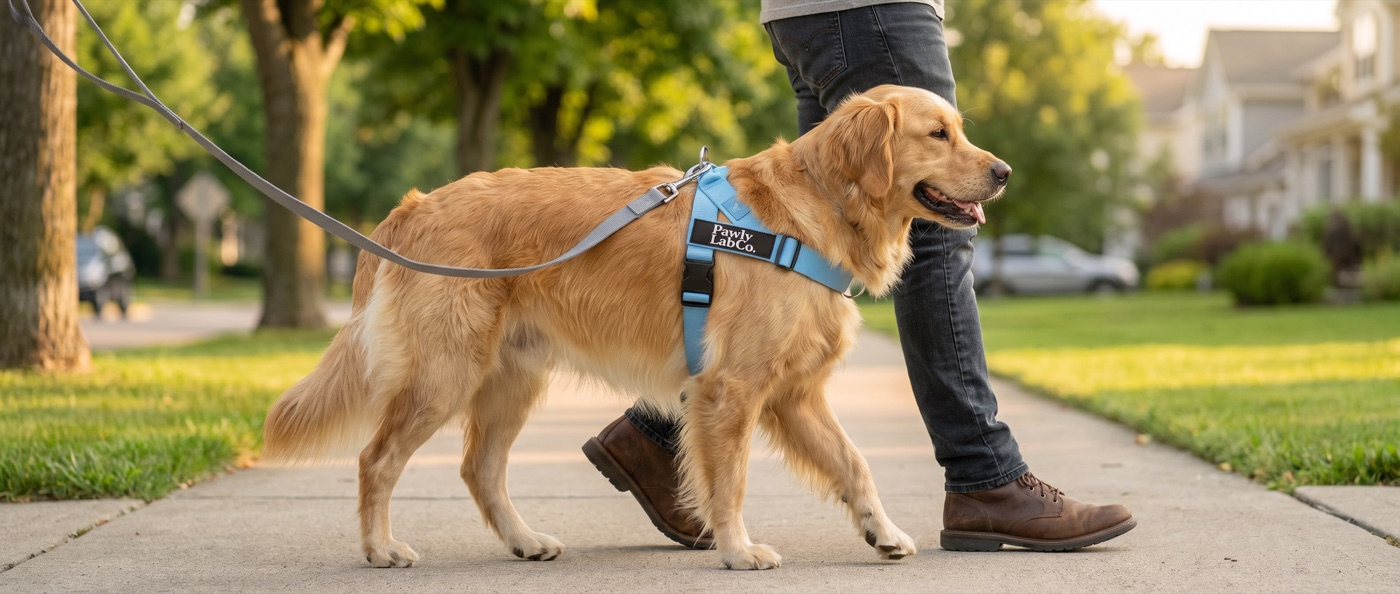
(The leash is attached at the chest — note how much slack there is.)
- Attachment: front, at the centre of the chest
- Reflex: avoided — pressure rotates the dog, nothing pushes into the chest
- Time to effect: the first walk, no conditioning period
- Neck pressure: none — load sits across the chest and shoulders
- Tolerance: high — it is a normal harness, nothing goes near the face
What sets it apart: it is the only one of the three that addresses the reflex rather than trying to overpower it. You are not stronger than your dog and you were never going to be. Moving the attachment point means you do not need to be.
That is also why it tends to work on dogs that have already “failed” other equipment — nothing was wrong with the dog, and the previous harness was working against you.
Tried everything. Prong collars, head halters, three different harnesses. Nothing worked until this. The front clip breaks the pulling habit instantly. My Husky walks beside me now. Verified buyer · 5.0★ from 12 reviews
✅ Works with the opposition reflex instead of against it
✅ Effect is immediate — no weeks of conditioning
✅ No pressure on the throat or windpipe
✅ Dogs accept it like any ordinary harness
✅ Y-strap front panel keeps the shoulders free to move
✅ Works for the person — less bracing, less shoulder strain
❌ Only sold online, so you cannot try the fit in a shop first
Bottom line: the only one of the three that changes the physics of the walk rather than asking you to win a tug of war.
#2 Standard Back-Clip Harness
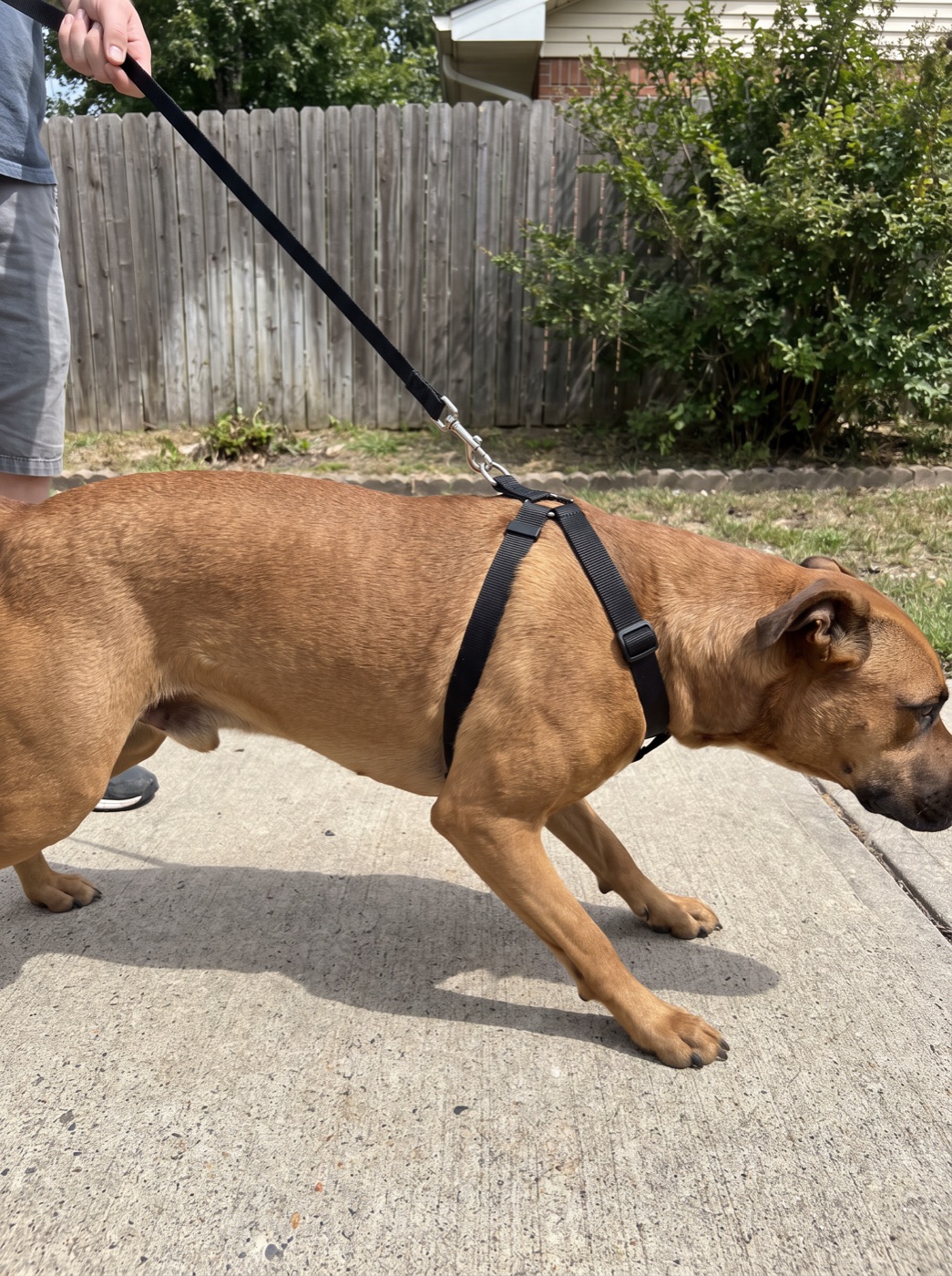
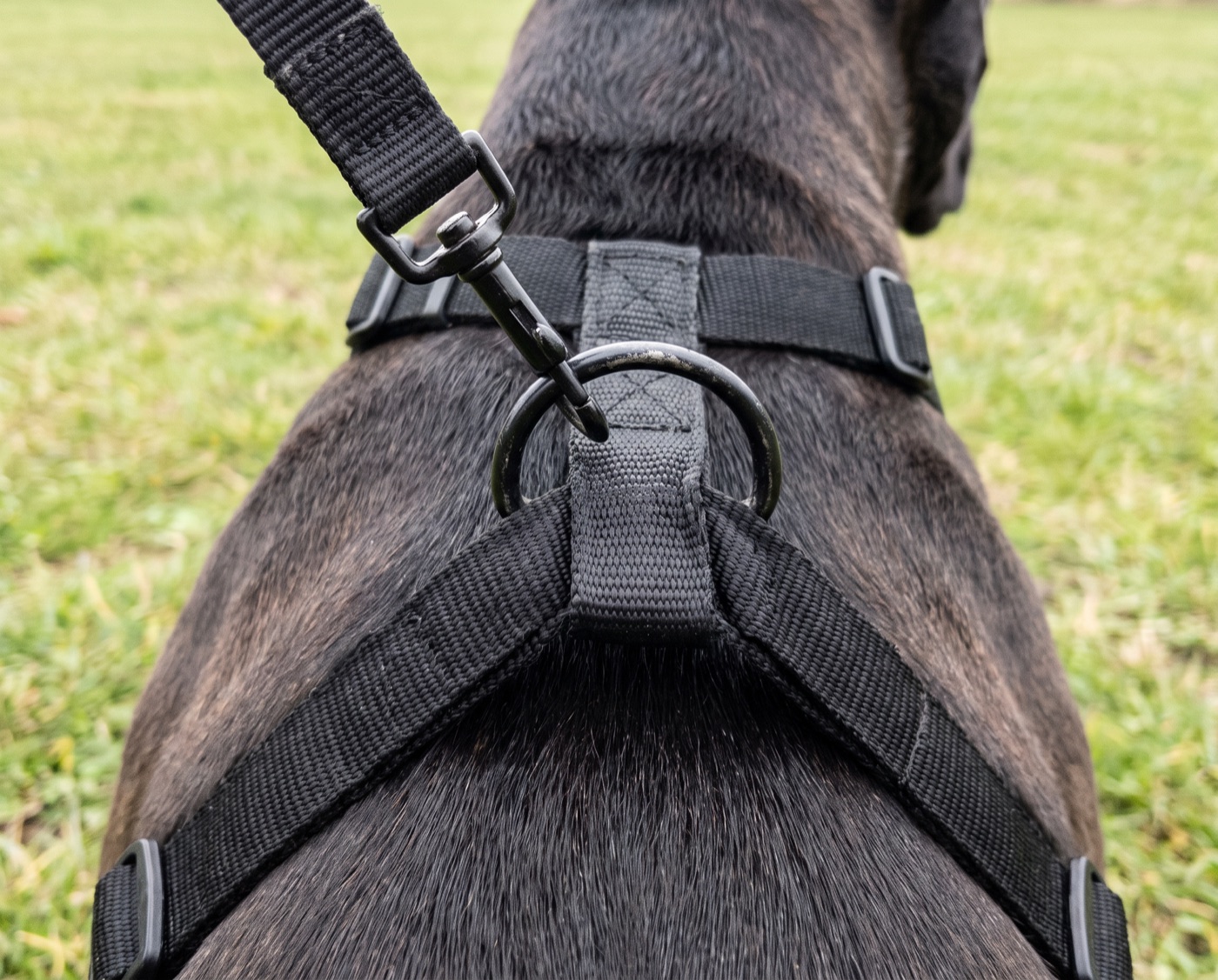
(The leash pulls up and back from between the shoulder blades — the sled position.)
- Attachment: back, between the shoulder blades
- Reflex: triggered — pressure drives the dog forward
- Time to effect: does not reduce pulling on its own
- Neck pressure: none, which is why it feels like an upgrade from a collar
- Tolerance: high — dogs are comfortable in it
What sets it apart: it is genuinely the most comfortable of the three and it does solve the problem it was designed for — keeping load off a dog’s neck. It was never designed to stop pulling.
This is the one almost everybody buys first, and the reason so many people conclude that “no-pull harnesses don’t work”. It is a good harness being asked to do a job it has the wrong geometry for.
✅ Comfortable and widely tolerated
✅ Takes all pressure off the neck
✅ Easy to fit and available everywhere
✅ Fine for a dog that already walks on a loose leash
❌ Puts the leash exactly where a sled harness goes
❌ Bracing against it makes the dog push harder
❌ Gives you no leverage on a sudden lunge
❌ Often marketed as “no-pull” when the mechanism is the opposite
Bottom line: a good harness, and the wrong tool for this job.
#3 Head Collar / Head Halter
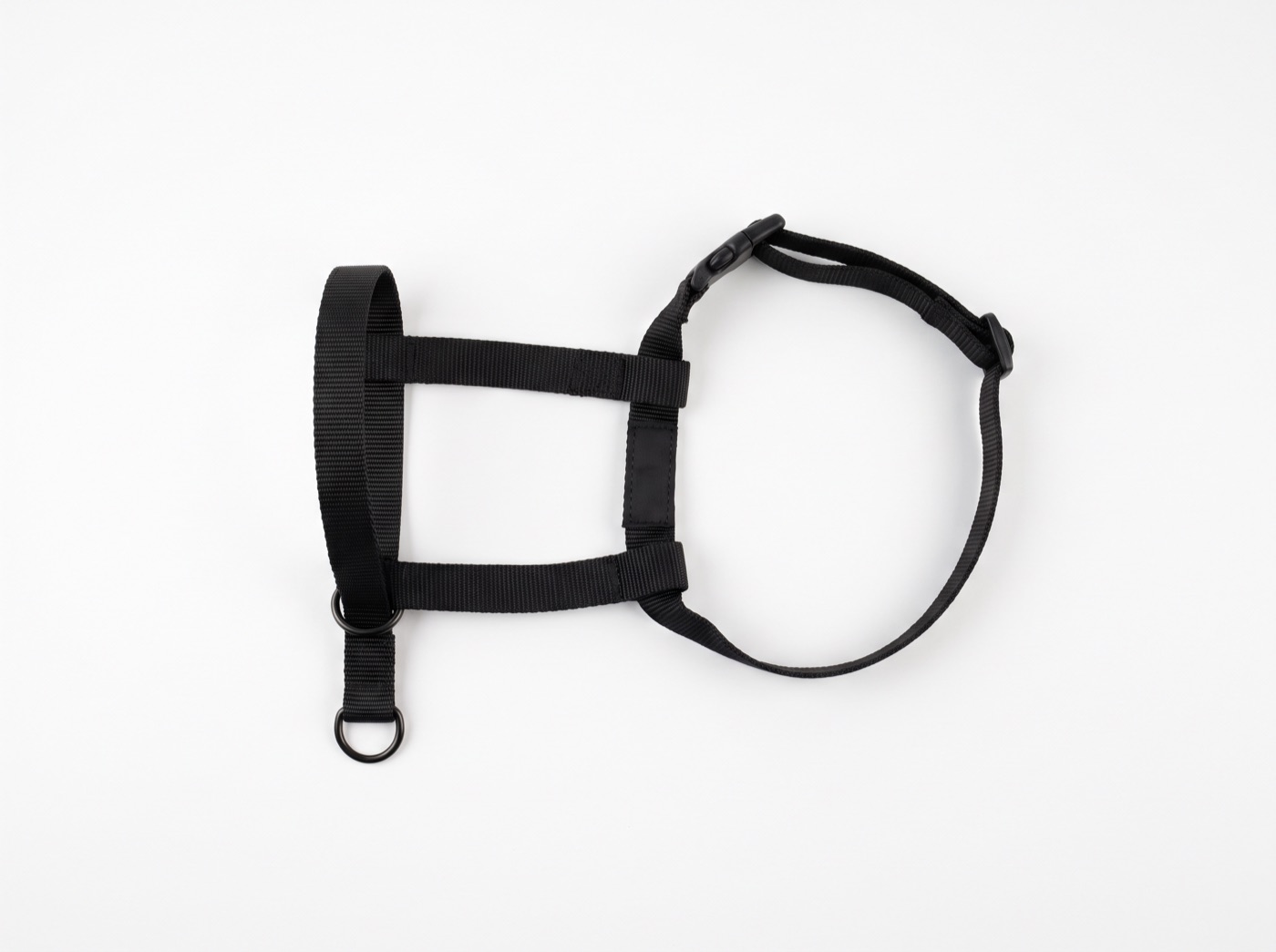
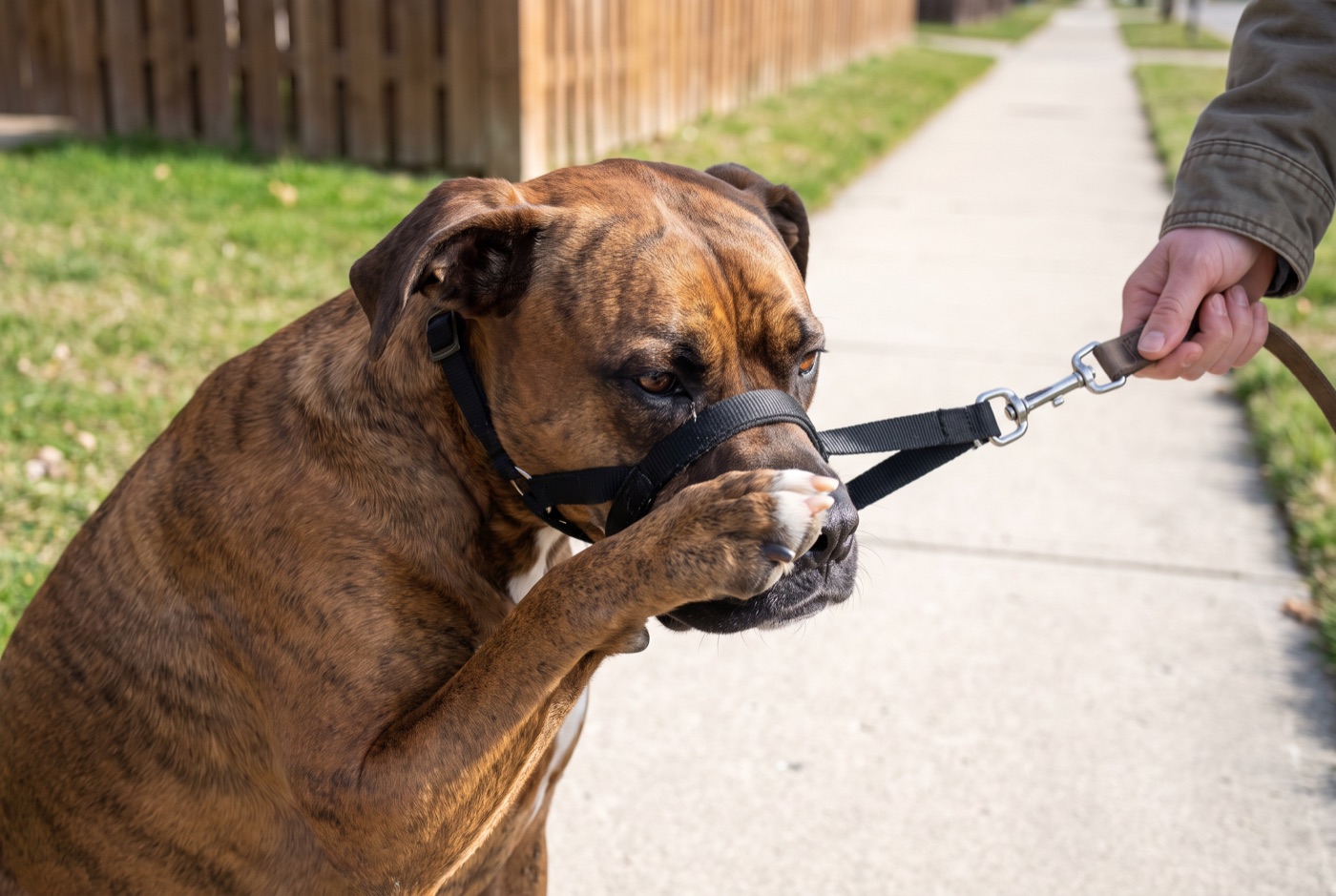
(Effective on paper. This is the reaction most owners describe on day one.)
- Attachment: a loop around the muzzle, leash under the chin
- Reflex: bypassed — steer the head and the body follows
- Time to effect: immediate, if the dog tolerates it
- Neck pressure: low, but torque is applied to the head and neck
- Tolerance: the weak point — many dogs never stop fighting it
What sets it apart: mechanically it is the most powerful of the three. Control the head and you control the dog, which is why trainers reach for it with very strong pullers.
The catch is compliance. It needs a real desensitisation period, and a sizeable share of dogs spend the walk rubbing their face along your leg or the grass. Power you cannot actually use is not power.
✅ The most mechanical leverage of the three
✅ Works immediately on very strong pullers
✅ Useful for handlers with limited strength
✅ Keeps sustained load off the windpipe
❌ Many dogs refuse to accept it
❌ Needs a proper conditioning period before it is usable
❌ A hard lunge torques the head and neck sideways
❌ Frequently mistaken for a muzzle by passers-by
Bottom line: the strongest mechanism, and the one most likely to end up unused in a drawer.
The Real Talk: Why The Mechanism Beats The Price Tag
The uncomfortable thing about this comparison is that price predicts almost nothing. You can spend a lot on a beautifully made back-clip harness and it will still put the leash in the sled position.
It also means the failure you have been blaming yourself for probably was not yours. If you have tried three harnesses and a trainer and your dog still pulls, the most likely explanation is that all three had the leash in the same place.
None of this makes pulling a training problem you have failed to solve. It makes it a geometry problem, and geometry is fixable in an afternoon.
That is also the honest limit of this article: a harness changes the physics of the walk. It does not train your dog, and anyone telling you a piece of equipment replaces training is selling you something.
Our Recommendation (Based on Mechanism, Not Hype)
If your dog pulls and you want the shortest path to a calmer walk, start with the front-clip harness. It is the only one of the three that removes the reflex from the equation, and it does it on the first walk.
If your dog is an extremely strong puller and you have the patience for a proper introduction period, a head collar is a legitimate second option — provided your dog will genuinely wear it.
And if you already own a back-clip harness, keep it. It is a perfectly good harness for a dog that is not pulling. It is simply not the thing that will stop the pulling.
One Important Note About Sizing
Fit is what makes a front clip work. If the chest strap sits too low, the leash pulls from below the shoulder and you lose the rotation that does the job. Measure your dog’s girth just behind the front legs and check it against the size chart before ordering — and if it is between two sizes, take the larger one and tighten it down.
Final Thoughts
There is no magic harness. There is a mechanism that fights your dog’s reflexes and a mechanism that sidesteps them, and the difference between them is about four inches of webbing.
If walks have become something you schedule around rather than look forward to, that is worth fixing — not because your dog is difficult, but because you have both been fighting a reflex that was never going to lose.
Try the front clip on your next walk and watch the leash rather than the dog. If it goes slack, you have your answer.