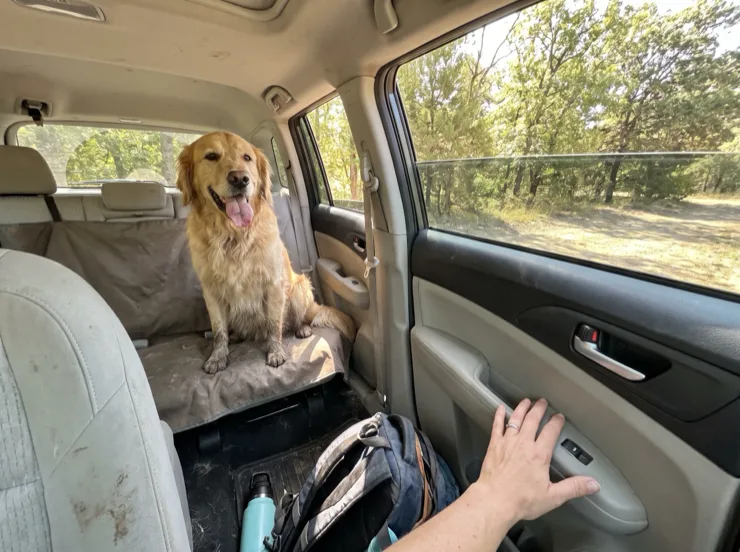
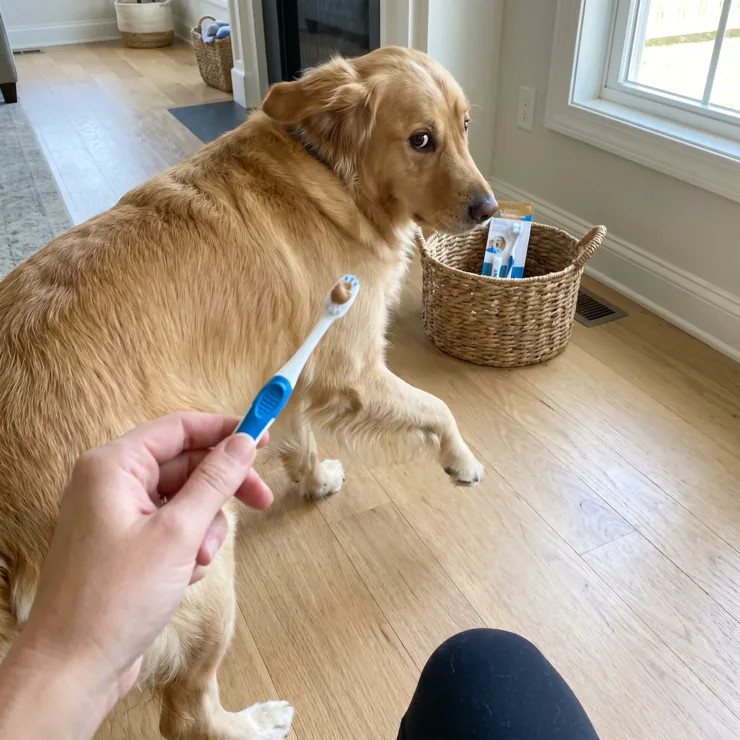
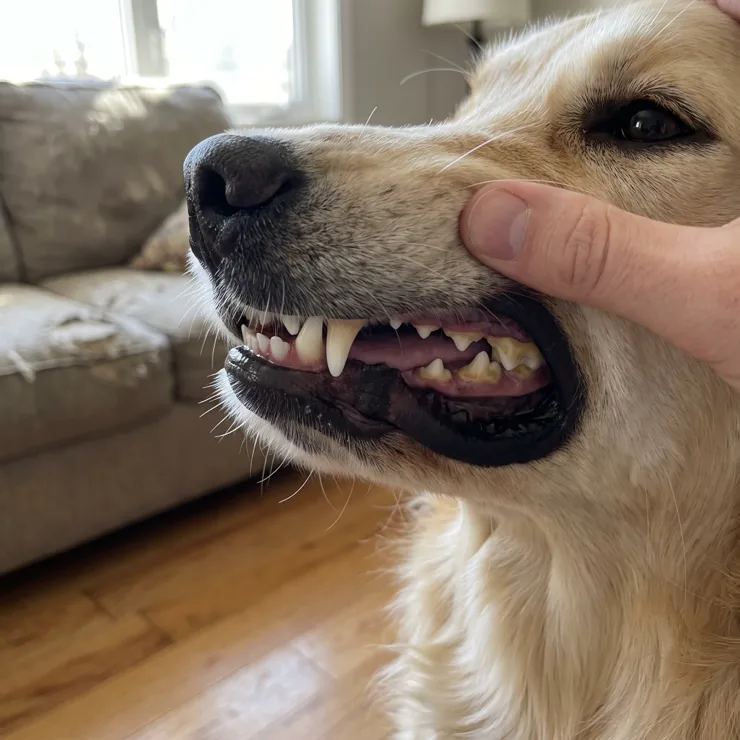
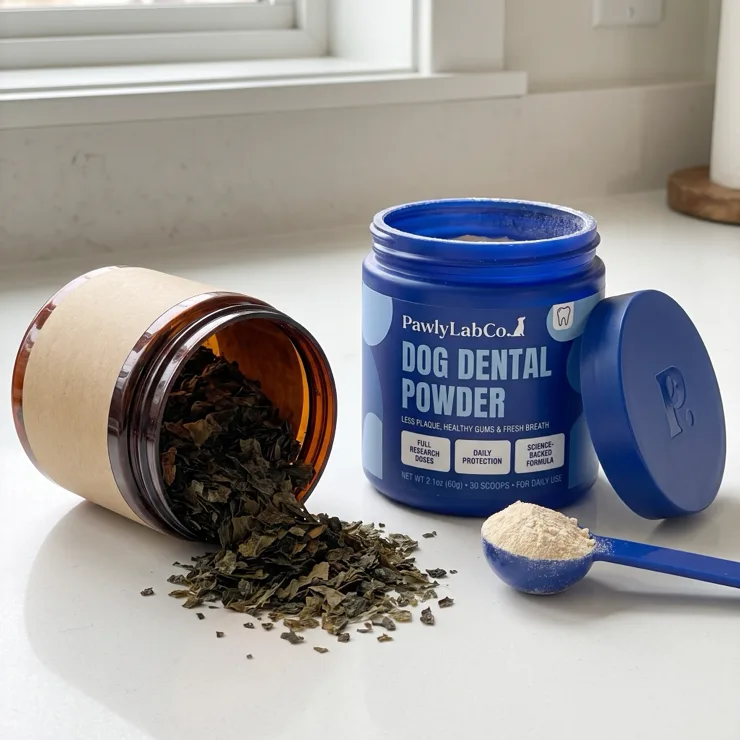
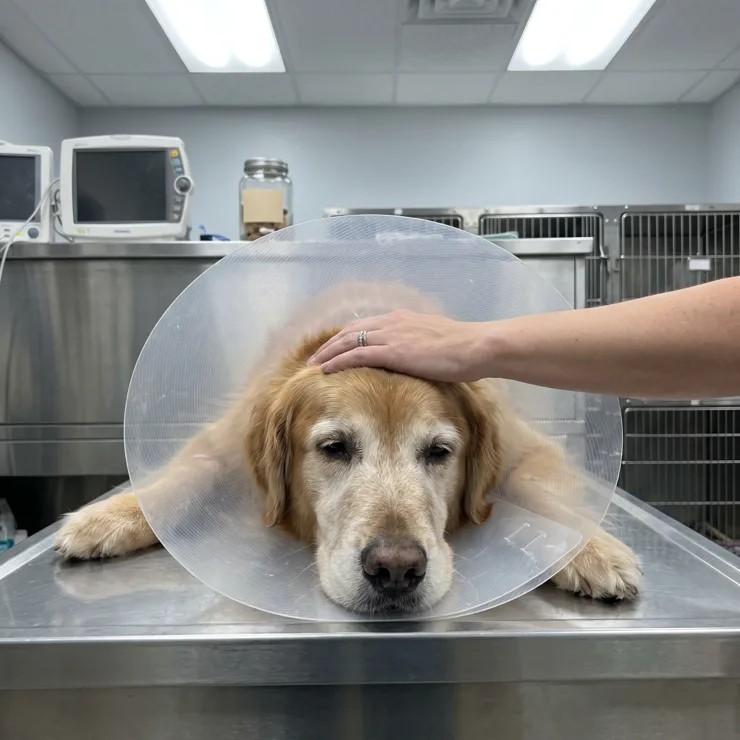
They all look like normal dog-parent behavior. Number 5 is the one that ends at the vet.


You know the moment. He climbs into the back seat after a walk, pants once, and the whole car needs the windows down.
Most of us shrug it off. "Dogs smell." But that smell isn't age and it isn't personality. It's a film of bacteria on the teeth called plaque, and the odor is what it gives off as it grows. Most dogs show signs of dental disease by age three, and the breath is almost always the first sign a dog parent gets.
The good news hides in the same fact: when the bacteria stop winning, the breath is the first thing that changes.
It can be. Persistent bad breath is the most common early sign of plaque and gum irritation. Red gums, bleeding, or chewing on one side only: see your vet.

Vets say brush every day. Be honest: how many times did you manage last week?
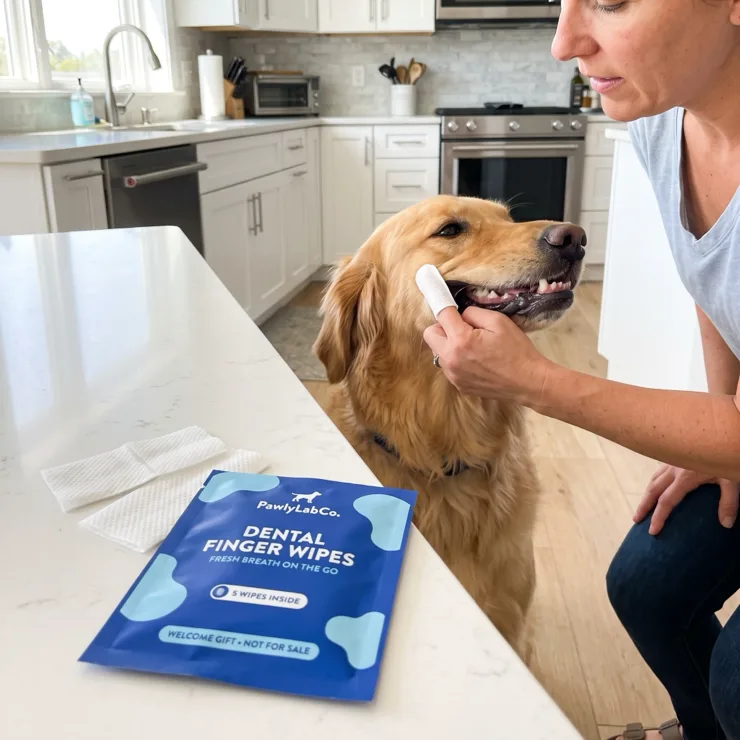
Most dogs treat a toothbrush like an attack. You chase, you pry, you quit, and the plaque is back within 24 hours anyway. The toothbrush in the drawer isn't protecting anyone. It's just letting you feel like you have a plan.
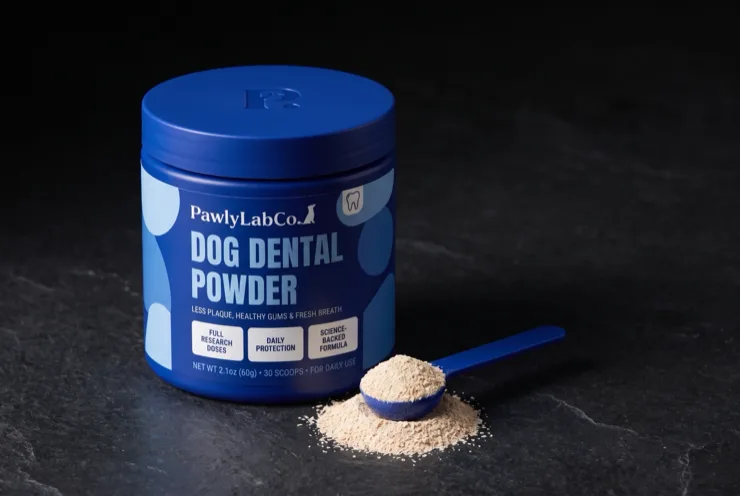
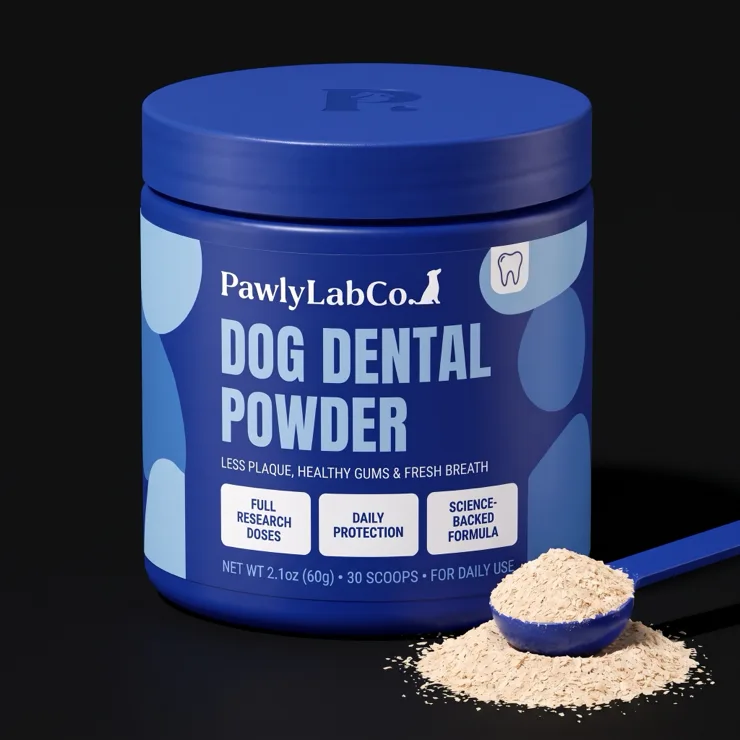
One scoop on dinner takes two seconds and the dog does the work himself, meal after meal. The dental routine that works is the one that actually happens every day.
No. It makes daily care happen between cleanings, especially for dogs who won't let you near their mouth. It helps reduce new plaque; it won't remove hardened tartar that's already there.

Even the dog parents who do brush mostly brush the front. The back molars, where tartar builds first, never see the bristles. Water additives get diluted in the bowl. Chews only scrape where the dog chews.
Brown seaweed (Ascophyllum nodosum) works differently. It's absorbed and released back into the saliva, and the saliva touches every tooth at every meal. The surface plaque needs to grip becomes harder to hold on to, front teeth and back molars alike.
No brushing, no rubbing, no wrestling. The dog eats. The saliva does the rounds.
Compounds in Ascophyllum nodosum are absorbed from the gut and carried into the saliva, where they change the film that coats the teeth so new plaque has a harder time attaching. It works from the inside, at every meal, which is why it reaches teeth a brush never does.

If you've tried a dental powder before, there's a good chance it was seaweed and nothing else. Seaweed is the right place to start. It's the hero active in ours too, at 650 mg per scoop. But seaweed only does one job: it changes the saliva so plaque struggles to grip.
It does nothing about who lives in the mouth. Loosen the bacteria and stop there, and the same colony grows back overnight, because nothing changed about the balance.
So we built around the seaweed instead of stopping at it. A heat-treated postbiotic and prebiotic fiber help beneficial bacteria settle in, pomegranate polyphenols support calmer gums, mint goes after the germs behind the smell, and vitamin E works as the antioxidant. Every one printed with its amount:
Seaweed iodine-tested every batch. Certificate of analysis on request.
Two reasons. First, dose: the dog studies used a specific daily amount per kilo, and many powders don't say how much seaweed is in a scoop. Second, the rest of the formula: seaweed loosens plaque's grip, the postbiotic and prebiotic change what grows back. Give it the full 90 days.
A probiotic is live bacteria that has to survive the jar and the stomach. A postbiotic is the heat-stable form, so the benefit is there whether the jar sat on a shelf or in the sun.

"We'll deal with it at the next cleaning." Here's what that sentence actually means.
A professional cleaning happens under general anesthesia. There's no other way to scale under the gum line of a dog. Every anesthesia carries risk, and the risk climbs for the dogs who need cleanings most: seniors, small breeds, flat-faced breeds, and dogs with heart or kidney issues. That's why your vet runs bloodwork first, and why so many dog parents keep postponing the appointment, while the plaque keeps hardening.
Then the bill: typically several hundred dollars, more with extractions. And the cycle restarts the day you get home, because the cleaning removes what's there; it doesn't stop what's coming.
Daily care won't replace a cleaning your dog already needs. It's what pushes the next one further away, and the one after that. One jar is 30 scoops, about $1 a scoop.
Some dogs will, depending on breed and starting point. The goal of a daily routine is fewer of them, spaced further apart. Your vet decides.
For a healthy adult dog the risk is low but not zero; it's higher for older or sick dogs, which is why pre-anesthetic bloodwork exists. Fewer cleanings means fewer times you have to take that risk at all.
Real, unedited words from public reviews of daily seaweed-based dental powder. Our own customer reviews are added here as they come in.
"I was a bit sceptical when we started our 11 year old cocker spaniel on this but we are now two months in and it has definitely made a big difference, her bad breath was awful, especially when she was sat in the back of the car panting after a walk."
"My dog is only 2 years old but I had noticed tarter starting to build up on his back teeth, after using the dental powder for around 3 months I have noticed an improvement."
"Everyone comments on him, although he is only two they seem to shine, even the vet has commented on them, especially when I have a dog that would rather chew the toothbrush than get his teeth cleaned!!"
"I am noticing that my boy's breath is definitely fresher. It used to knock me out when he came near me but especially in the car in a confined space I'm noticing there is less stinky dog breath."
"I have been using this for 8 weeks now in my Boston Terriers' food and their oral hygiene has definitely improved, no more dog breath!"
"The dental powder is so easy to use, pop it in his food, doesn't even know it's there."
Quotes are verbatim from public customer reviews of daily seaweed-based dog dental powders (not PAWLY LABS CO. customers). Individual results vary. PAWLY LABS CO. reviews will be published here as customers write them.

Daily scoop, real food, your dog. Fresher breath usually shows up in the first week or two. Cleaner-looking teeth and calmer gums take longer, because you're stopping new plaque, not scrubbing off old tartar.
Give it the full 90 days. If the breath and the teeth aren't changing, email us and we refund the jar.

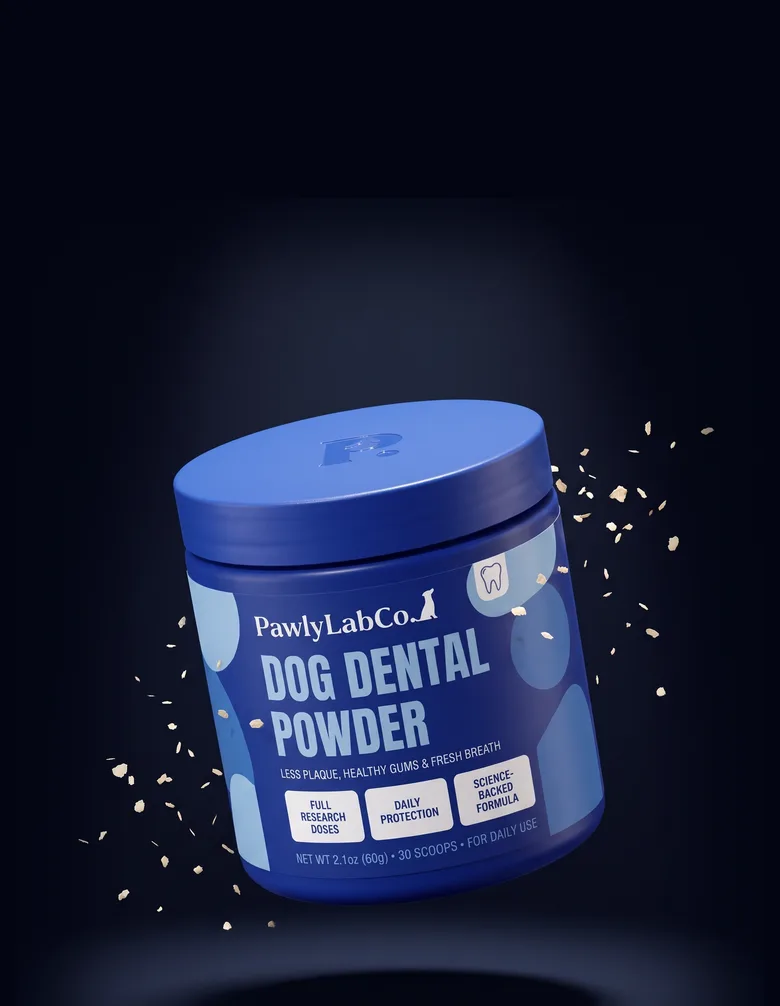
Stop guessing at the back teeth, the brushing that never happens, and the cleaning you keep pushing off. With the PAWLY LABS CO. Dental Powder, the routine is one scoop on dinner.
First jars ship with free dental finger wipes on RepeatCare, free US shipping, and a 90-day money-back guarantee. Cancel anytime.