
Free US
Shipping

Are You Accidentally Being a Bad Leader for Your Dog?
5 things dog parents do with a dog that pulls that quietly make the pulling worse. Most of us have done at least three. The fix for all five is at the bottom, and it works on the first walk.
FROM$39.95FREE US SHIP
30-Day
Returns
Returns
90-Day
Warranty
Warranty
Front Ring
In The Box
In The Box
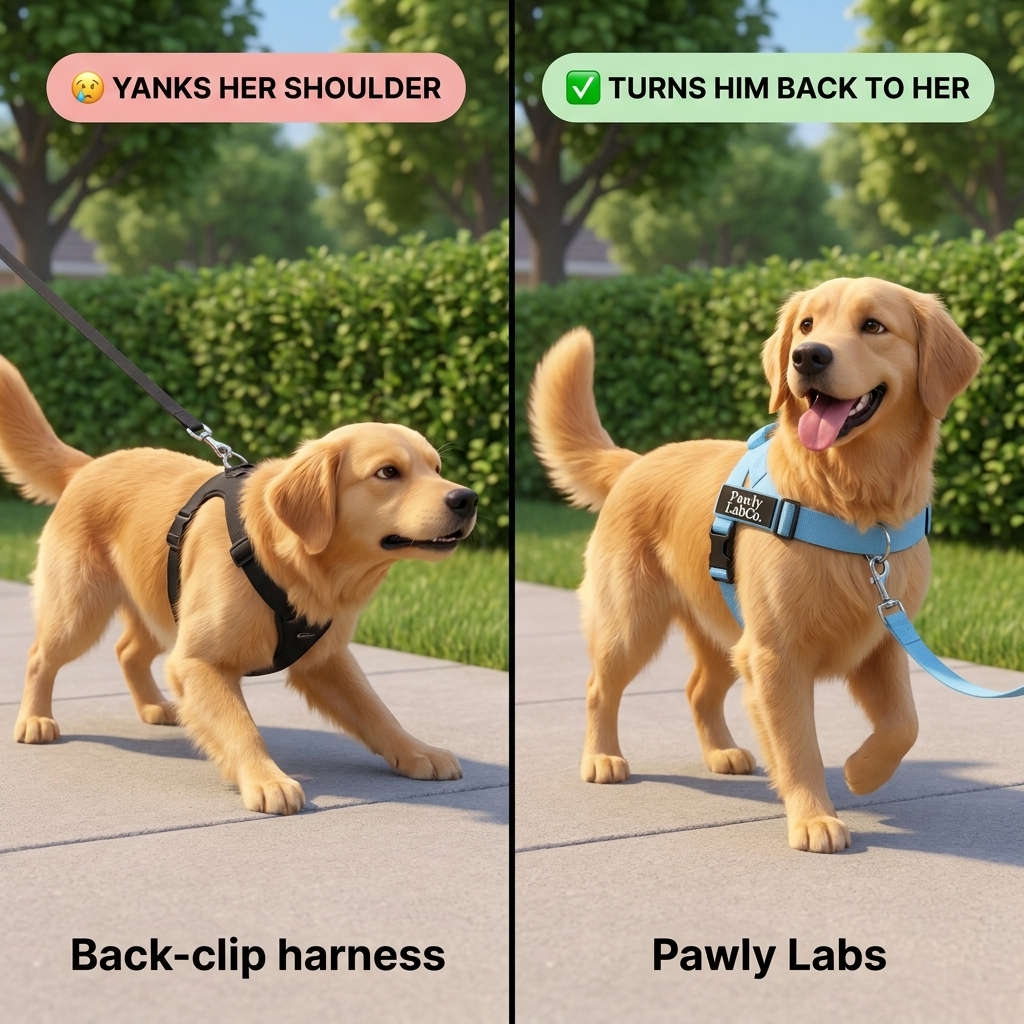
1. Is Your Gear Secretly Training Your Dog TO PULL On The Leash?
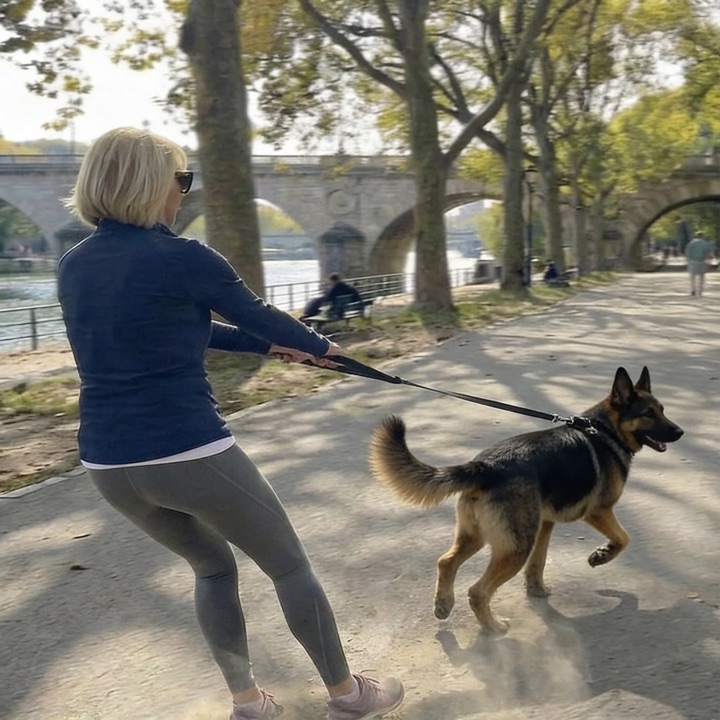
Look at where the leash clips on his harness. If it's on his back, between the shoulder blades, that's exactly where sled dogs wear theirs, because it's the strongest place on a dog's body to pull from. Every time he leans in and moves forward, the gear tells him: this works.
So he isn't being bad. He's being trained, by his harness, to pull. That's why so many people search "do harnesses make dogs pull more." With a back clip, the honest answer is yes.
And the next thing most of us try makes a different mistake:
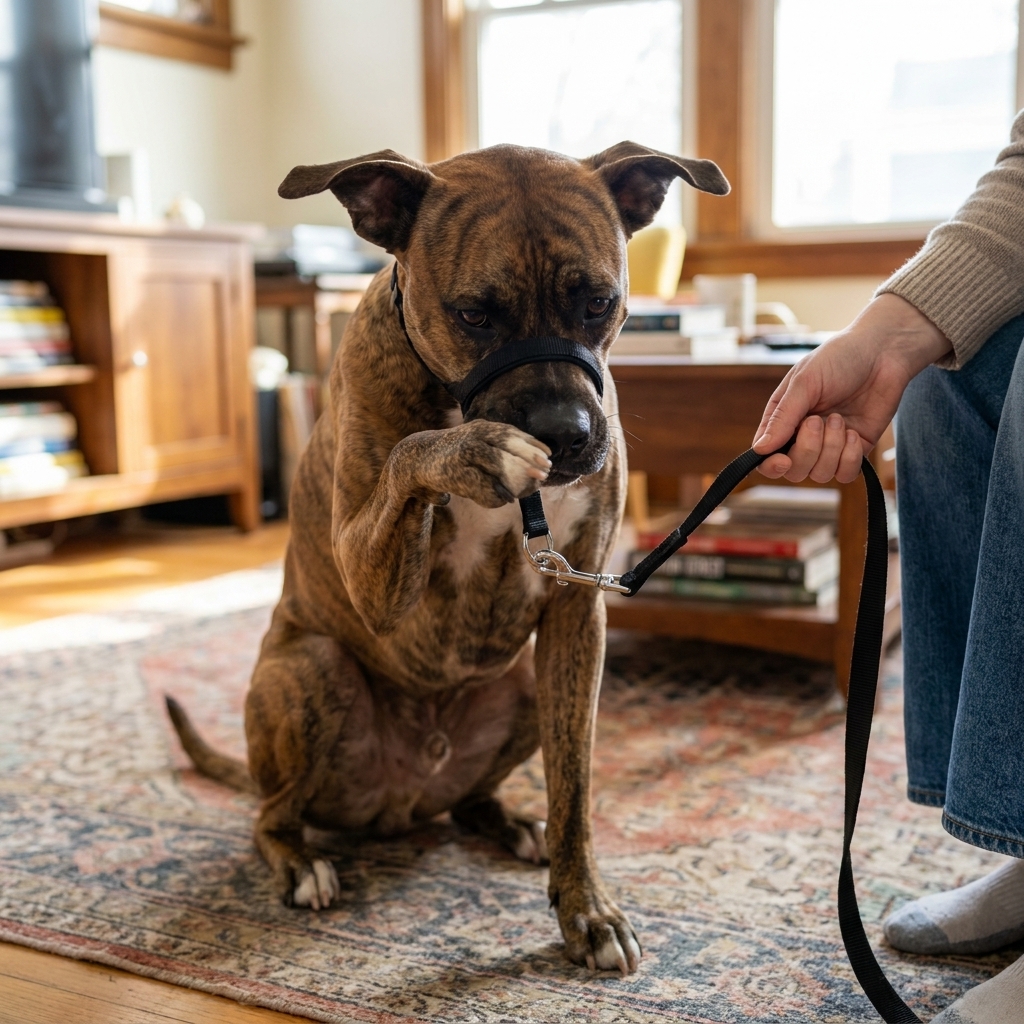
2. Did You Know the Nose Loop Steers His Head, Not the Pull?
Someone recommended the head collar. The vet, the trainer, the woman at the park. And it does what the box says: it "loops around your dog's nose, so when he pulls, it gently moves his head toward you." Their words. When his nose turns, he turns.
Here's the test: take it off. Does he pull again the second it's gone? Then it managed his head. It never touched the reason he pulls, which lives in his chest and his reflexes. That's why owners end up searching "not working," "rubbing fur off nose," and "marks on nose," and why the manufacturer's own instructions tell you to "let him wear it without a leash attached" until he stops fighting it. Two weeks of him rubbing his face on your carpet. And if your dog has a flat face, note this from their page: it "won't fit… pugs or bulldogs."
If your dog walks beautifully on one and you're both happy, keep it. This page is for the rest of us.
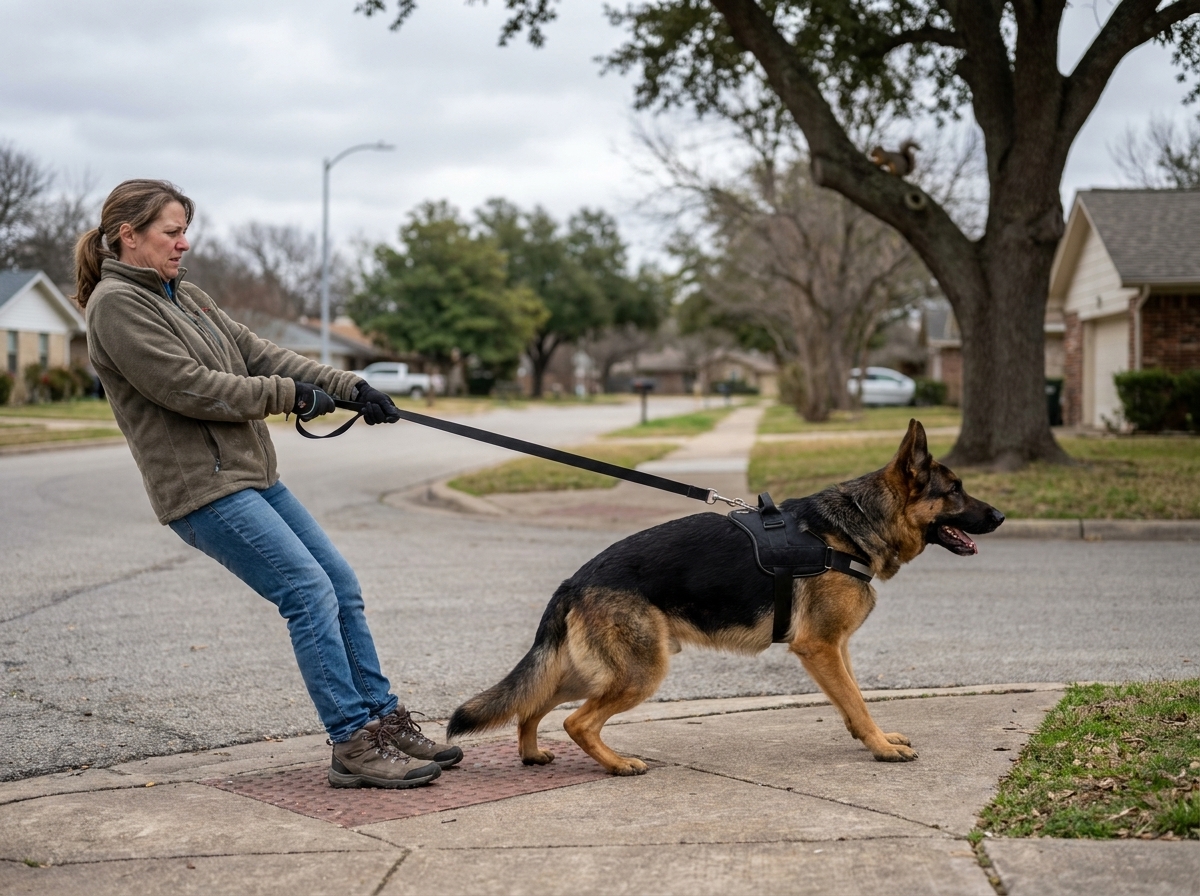
3. Are You Pulling Back? (Or Paying a Collar to Do It for You?)
When he lunges, you pull. It feels like the only option. But dogs have a reflex trainers call the opposition reflex: push against a dog and the dog pushes back. Every tug you give him teaches his body to lean harder. A prong or slip collar does the tugging for you, at his neck, and his reflex answers the same way. No prong, no ecollar, no tug-of-war fixes this.
The fix isn't more tension. It's where the tension lands:
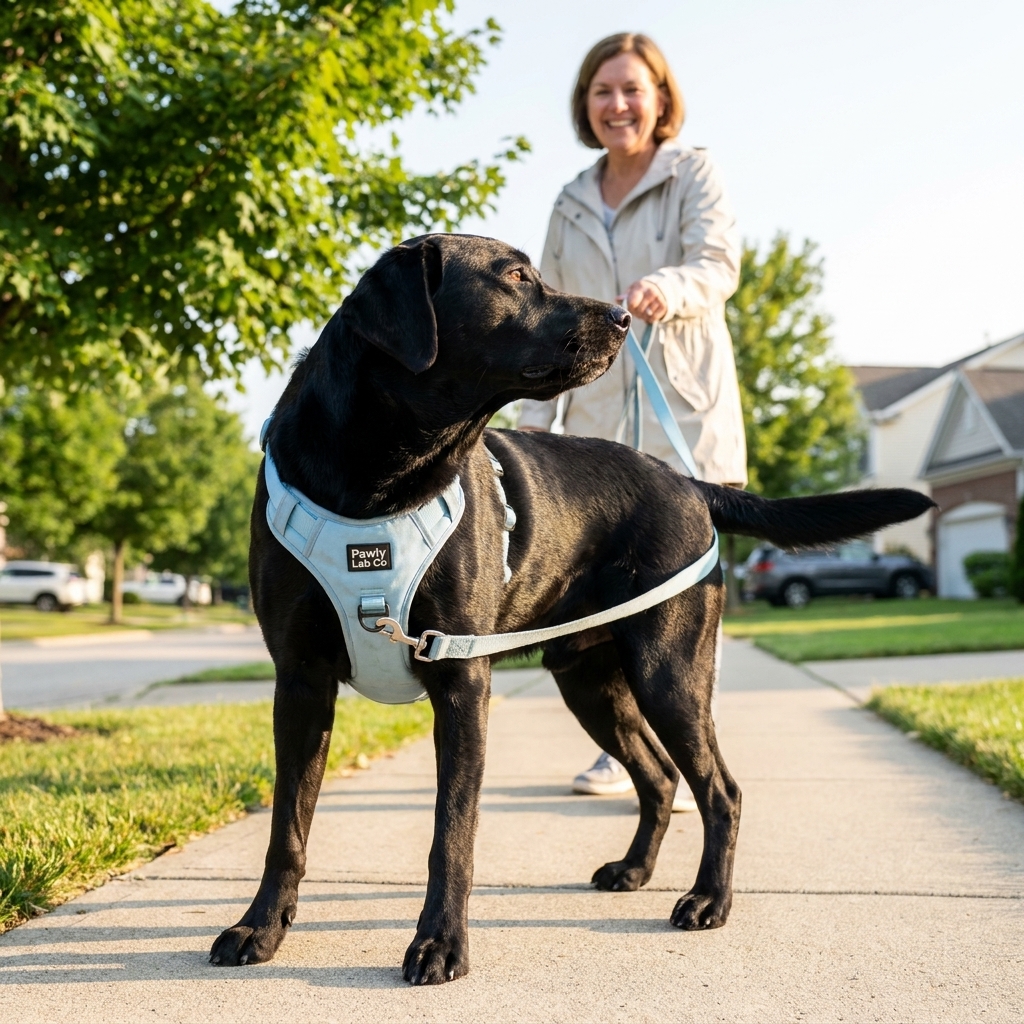
4. How Do You Train Your Dog NOT to Pull on the Leash? Move the Clip.
Training works. Trainers are worth every dollar. But if the leash still clips where sled dogs pull from, every walk between sessions rewards the exact thing you're paying to un-teach. That's why "even with substantial training I have not been able to break her of it" is a line from one of our reviews, and why people search "why does my dog pull on the leash after training."
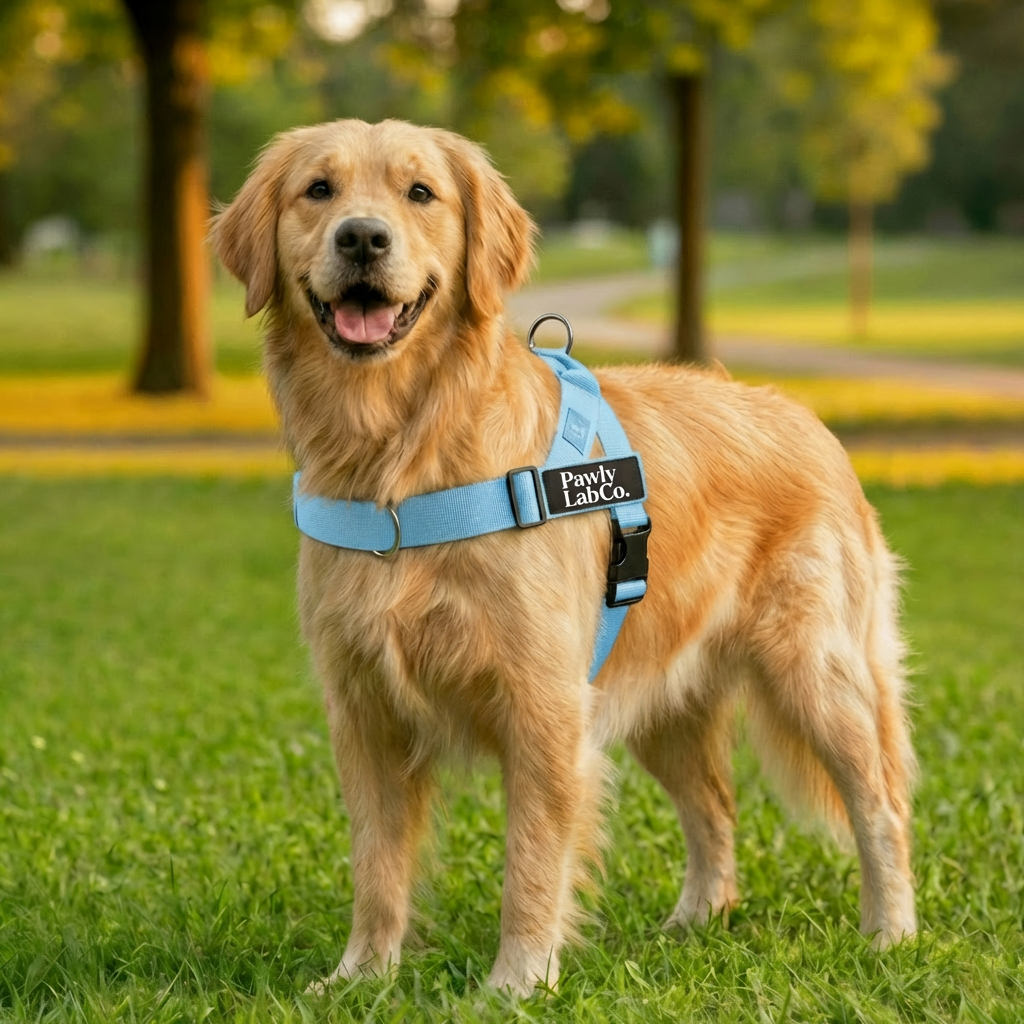
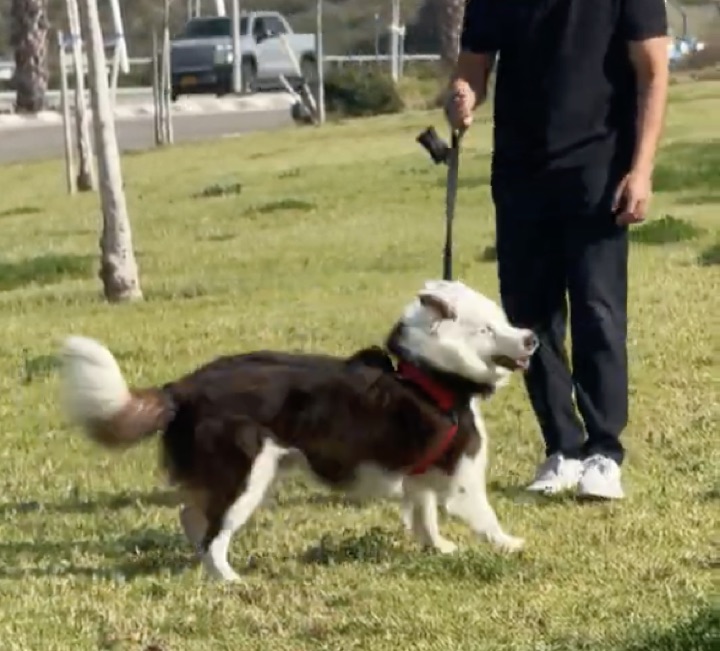
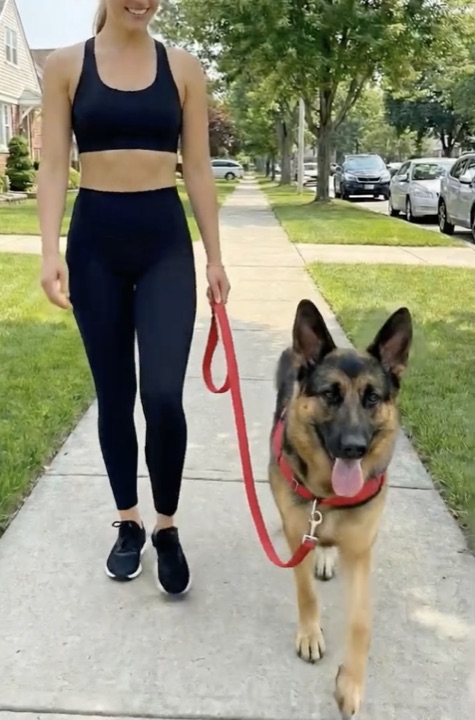
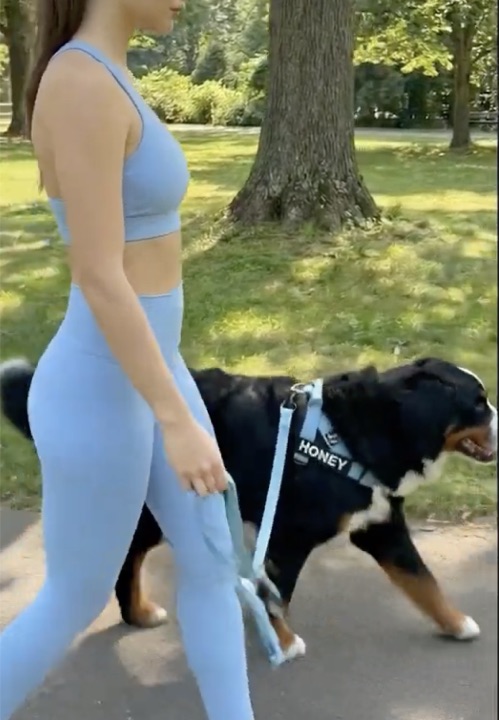
Clip the leash at the front of his chest instead. When he hits the end of the leash, the front ring turns him back to face you. There's nothing left to lean into. He learns, on his own body, that pulling doesn't go anywhere. Same dog, same street, different physics. Owners describe it the same way: "turns our pup if she pulls on a walk," "the difference during walks was noticeable right away," "I wish I had this 10 years ago."
This isn't a replacement for training. It's the gear that makes training stick.
See The Front-Clip Harness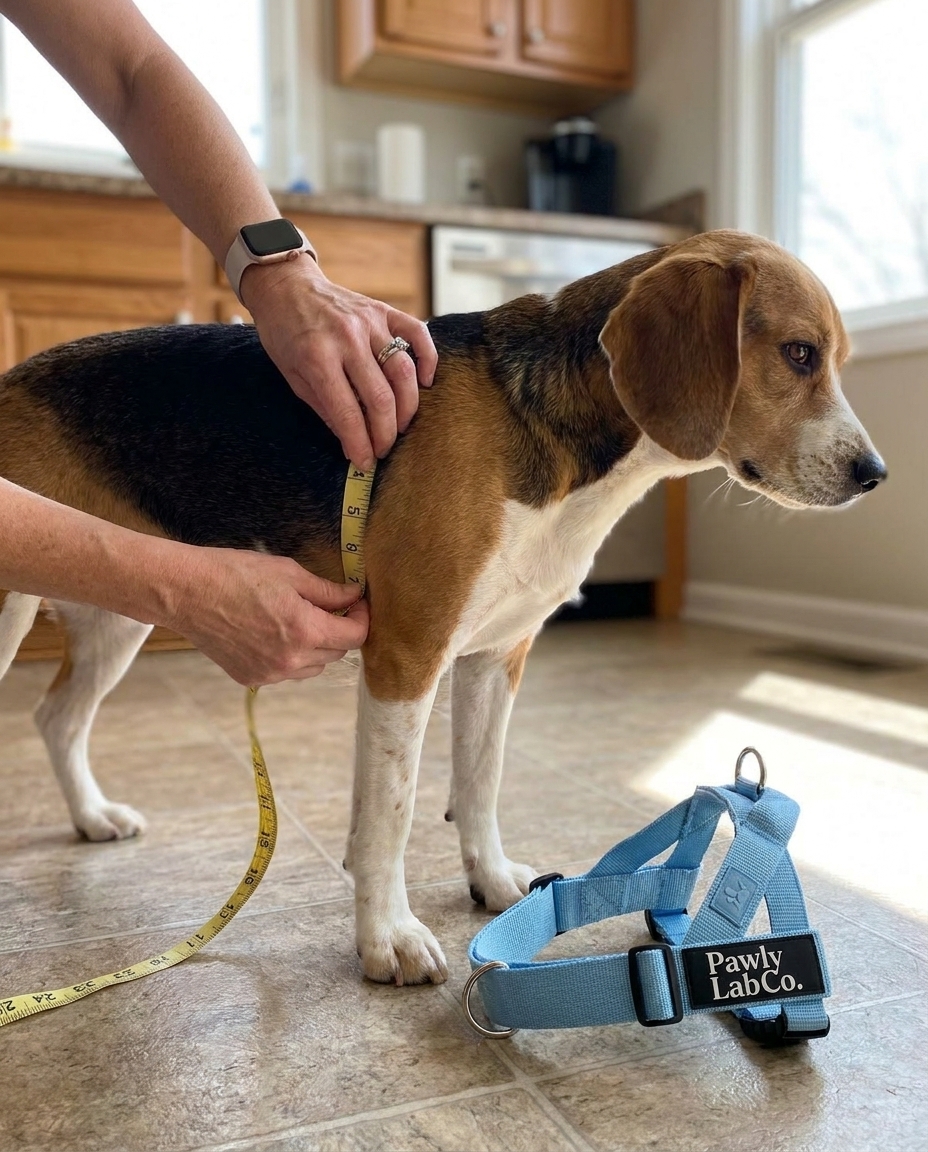
5. Did You Guess His Size From His Weight?
The number one reason a harness gets sent back, ours included, is size. Two 60-pound dogs can have completely different chests. Measure around the widest part of his ribcage with a tape, then use the chart. Ninety seconds, one less return.
Why Didn't the Harness, the Head Collar, the Prong, or the Trainer Work?
Because every one of them worked on the wrong thing.
Pulling has two parts. The first is a reflex: push against a dog and the dog pushes back. The second is leverage: where the leash attaches decides how much of his body he can put into the pull. Fix one part and leave the other, and the pulling comes back the moment the tool comes off.
- The back-clip harness handed him maximum leverage. It didn't fight the pull; it fed it.
- The head collar steered his head, which is management, not change. His chest, where the pull comes from, never learned anything. Off the loop, on the pull.
- Pulling back, the prong, the slip collar all added tension. Tension is exactly what the reflex answers with more pulling. You were pressing the gas to stop the car.
- The trainer worked on his mind, and that's real. But between sessions the gear kept rewarding his body for the opposite lesson. The best training in the world loses to a harness that pays him to pull every single walk.
Notice what none of them did: none of them took the leverage away.
So Why Does the Front Clip Work When Everything Else Didn't?
Because it's the only one that removes the leverage instead of arguing with the reflex. Clip the leash at the front of his chest, and when he hits the end of it, the ring turns him back toward you. There's nothing to lean into, so there's no pull to reward. His reflex still fires; it just turns him sideways instead of forward. That's why it shows up on the first walk instead of the tenth session: nothing had to be learned. The physics changed.
And it's your arm on the other end. A Johns Hopkins study counted 422,659 adult ER visits from walking a leashed dog over 20 years. Three out of four were women. Almost half were 40 to 64. Top injuries: a broken finger, a head injury, a sprained shoulder. With the clip at his chest, the jolt turns him sideways instead of running up your arm.
Source: Johns Hopkins Medicine, "Walking a Leashed Dog Associated with Risk of Traumatic Brain Injury Among Adults," 2023.
What Should You Know Before You Order? (We'd Rather You Knew.)
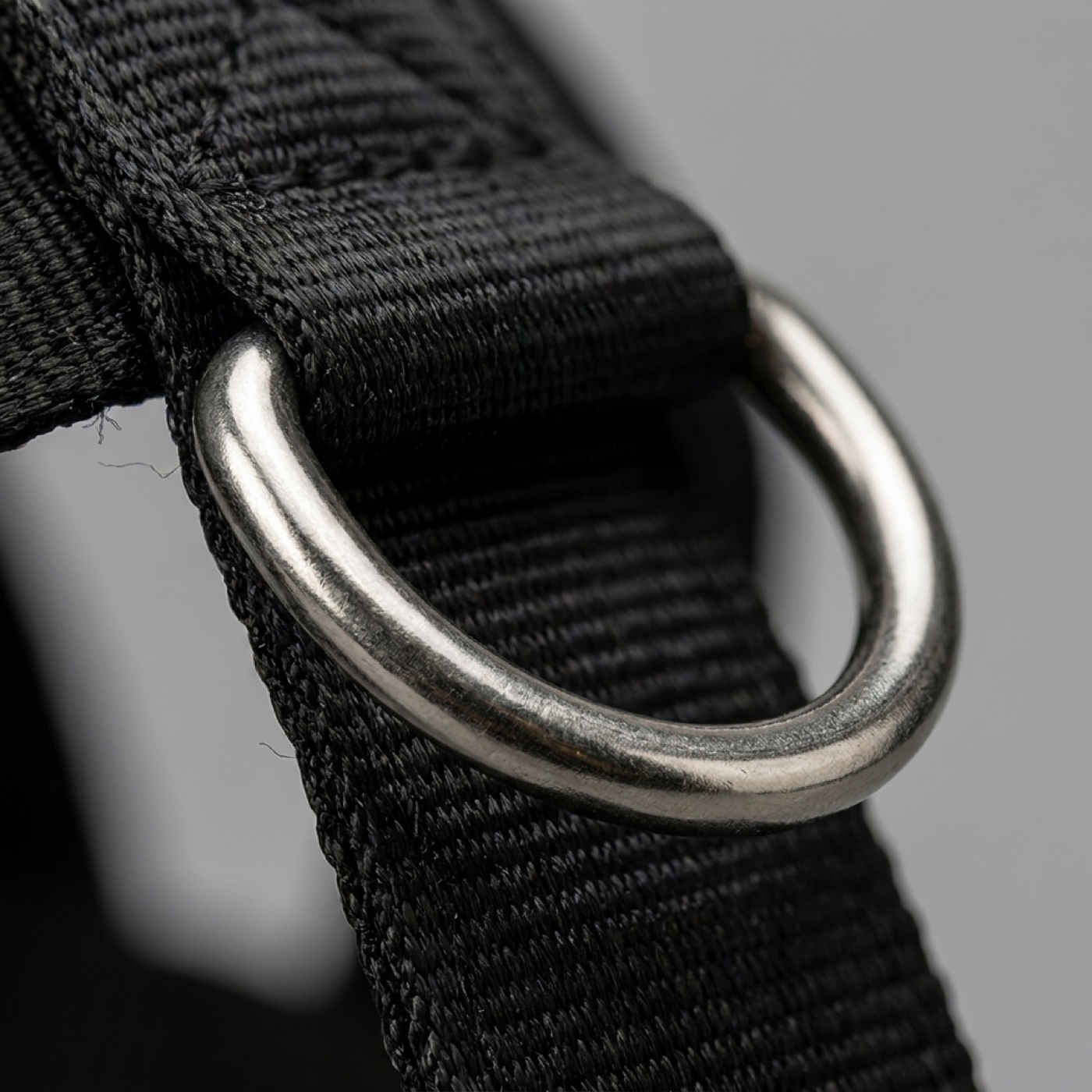
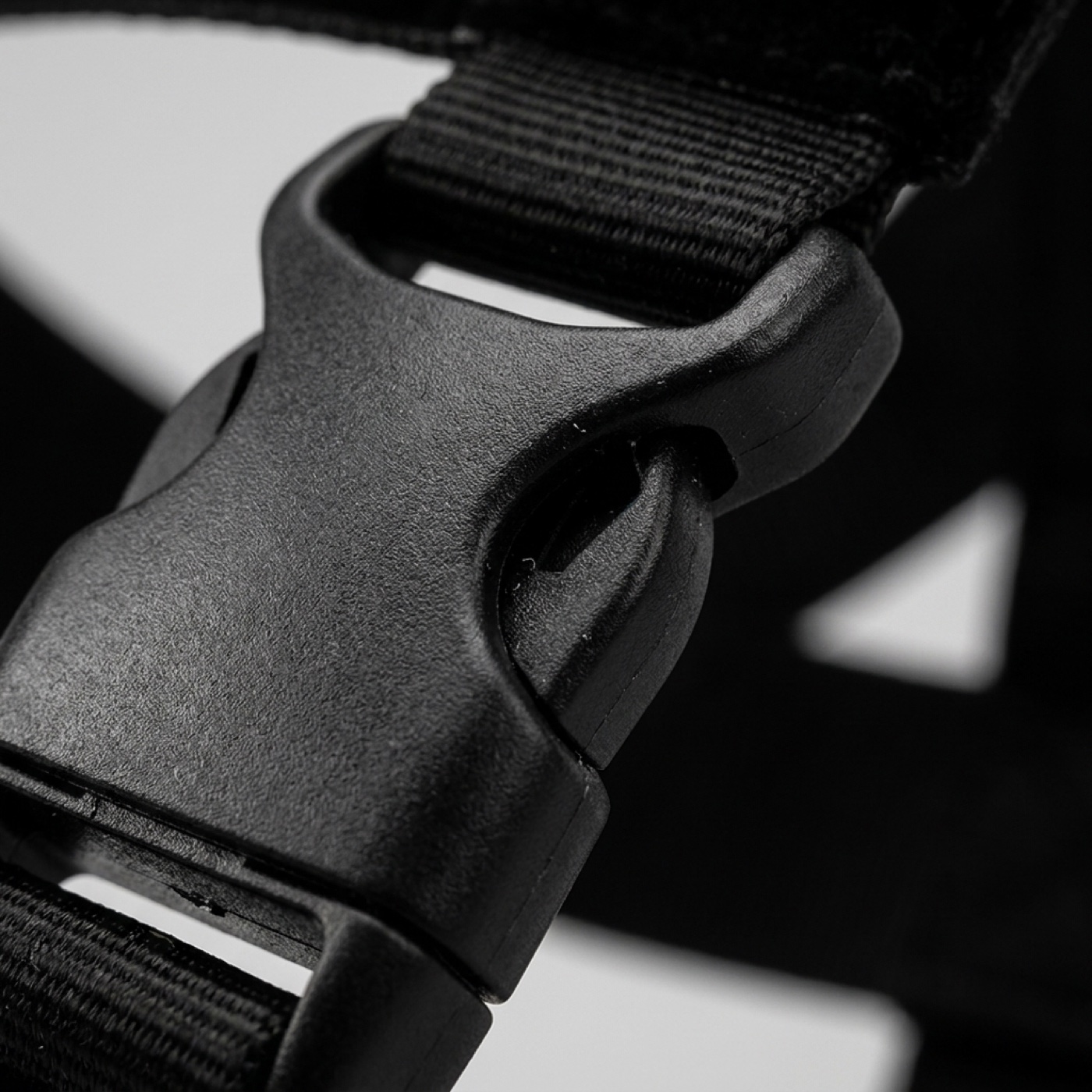
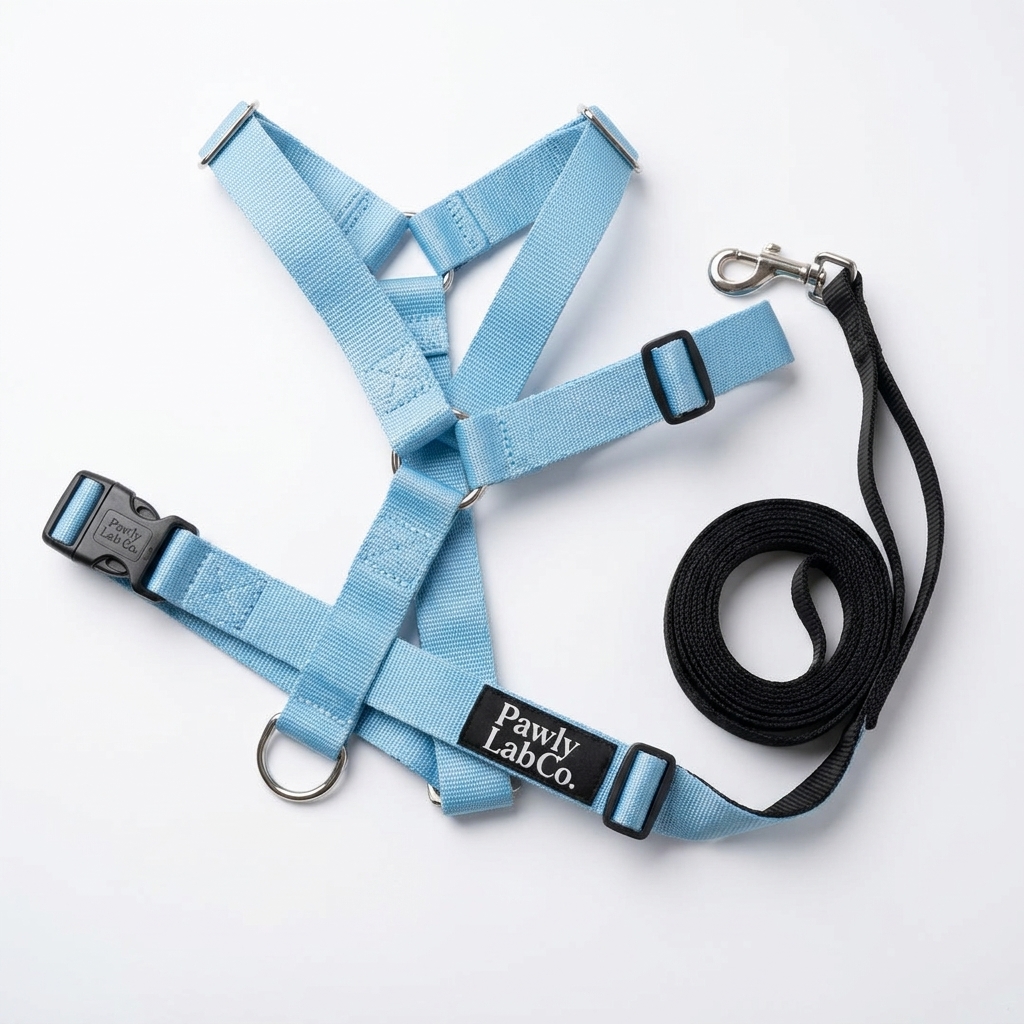
The front ring comes in the box and you attach it. Nearly every "it came off" message we get is the ring on the wrong side of the strap or a corner not pressed flat. Attached right, it holds a hard puller. If your dog is 60 lb or more and lunges, get the Premium upgrade: heavier nickel-plated D-rings and double-row stitching at every stress point.
Shipping is 7 to 13 business days to a US door from our overseas warehouse, tracked the whole way.
 We stand behind
our gear
· 90-Day Warranty ·
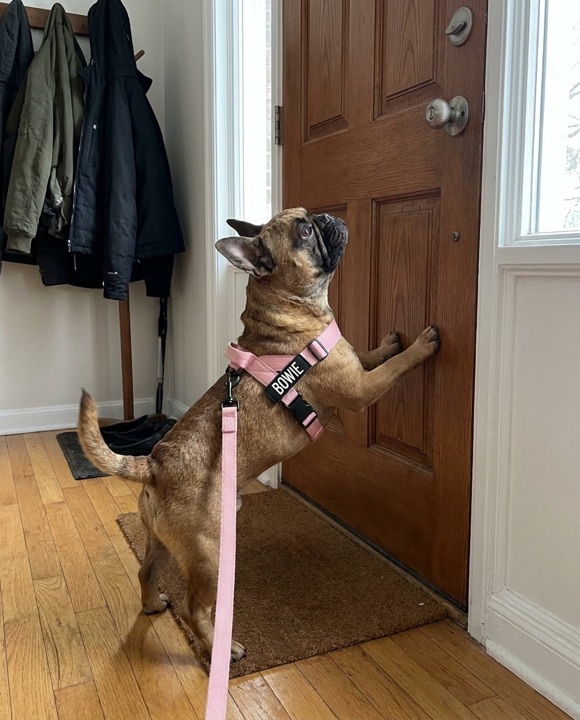
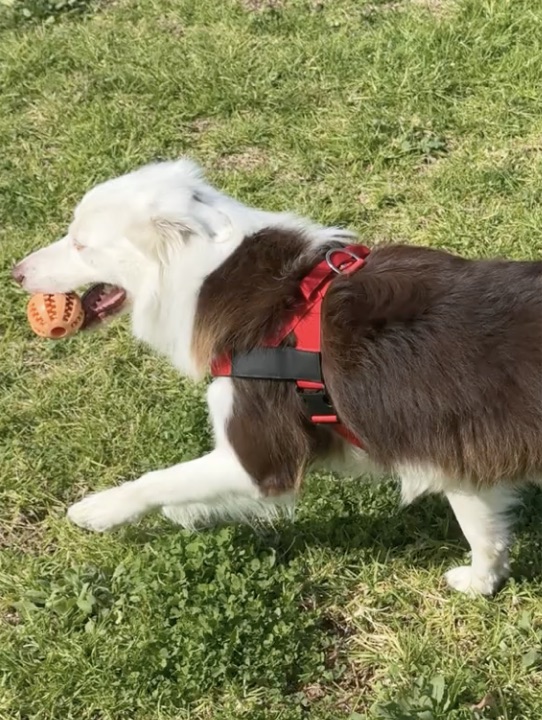
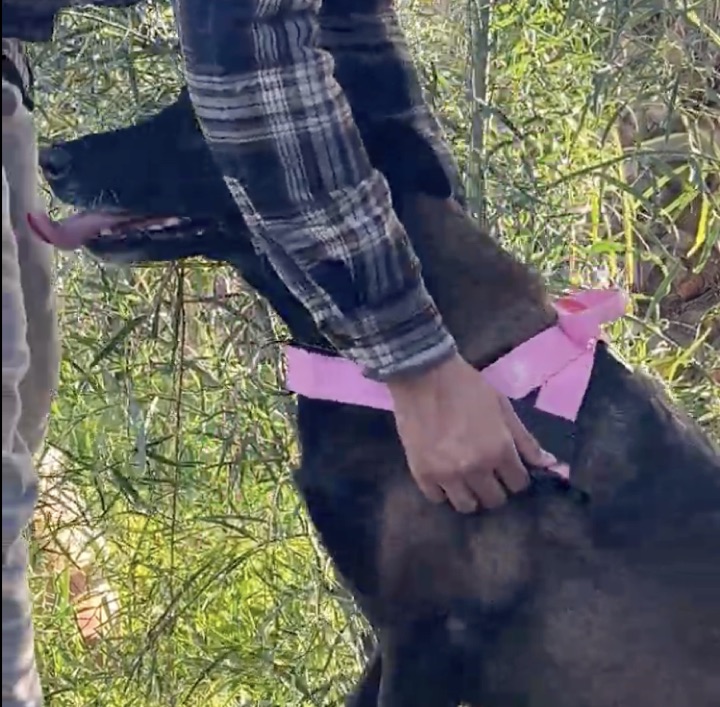
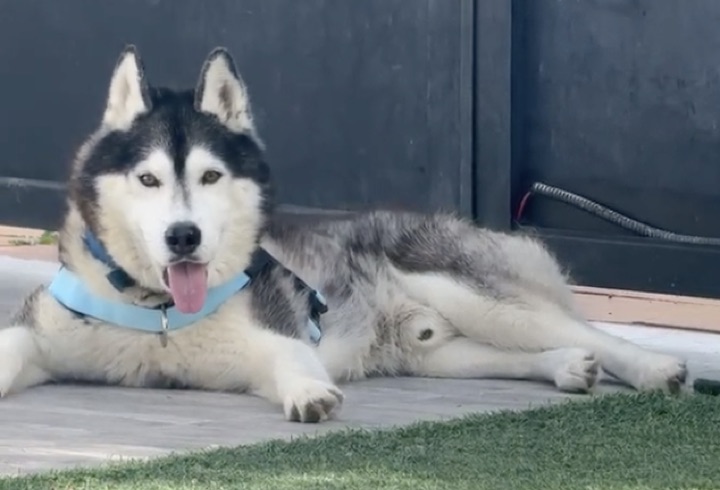
Ready to Stop the Pulling on Your Own Sidewalk, Any Breed, This Week?
One week of walks, the squirrel ones too. If he isn't turning back to you instead of towing you, send it back within 30 days of delivery for a full refund. 90-day warranty on stitching and hardware. Free leash in the box.
What do you have to lose, besides the sore shoulder?
For Everyone Who's Already Tried Everything
- Front chest ring turns him back to you instead of letting him tow.
- Free leash in the box. Bungee upgrade absorbs the lunge before it reaches your shoulder.
- Woven nylon webbing with double-row stitching, sizes XXS to XL.
“My shoulder hurt so bad I considered rehoming my dog. Tried this harness as a last resort. Three weeks later, zero pain.”
“It fits perfectly and turns our pup if she pulls on a walk. So much easier to put on than our old harness.”
Evan Reed, verified Trustpilot review
“I wish I had this 10 years ago. Even with substantial training I have not been able to break her of it. Not an issue any more.”
Art Sims, verified Trustpilot review
Free US
Shipping
Shipping
30-Day
Returns
Returns
90-Day
Warranty
Warranty
Front Ring
In The Box
In The Box
FROM
$39.95FREE US SHIPPING
$39.95FREE US SHIPPING
PawlyLab Co.™ No-Pull Harness
Free US Shipping★★★★★400+ verified reviews on Trustpilot
- Front Chest Ring Turns Him Back To You
- Slips Over The Head, One Large Buckle
- Free Leash In The Box, Sizes XXS To XL
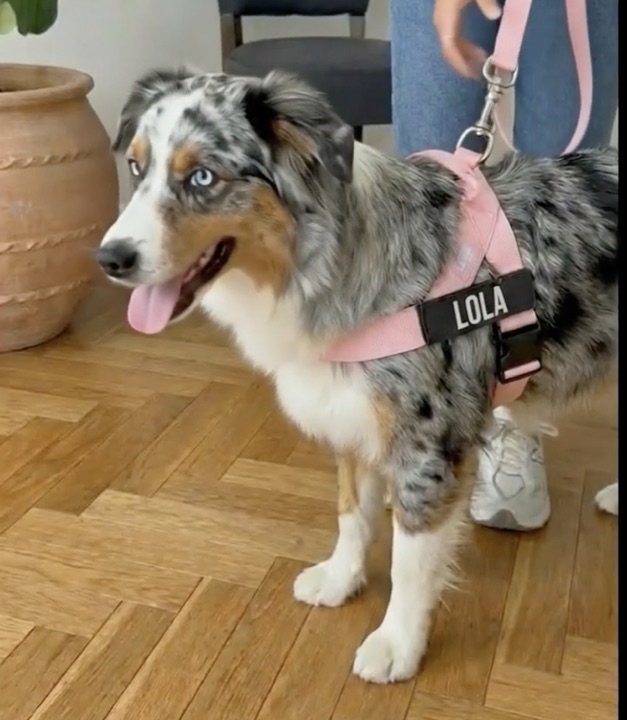
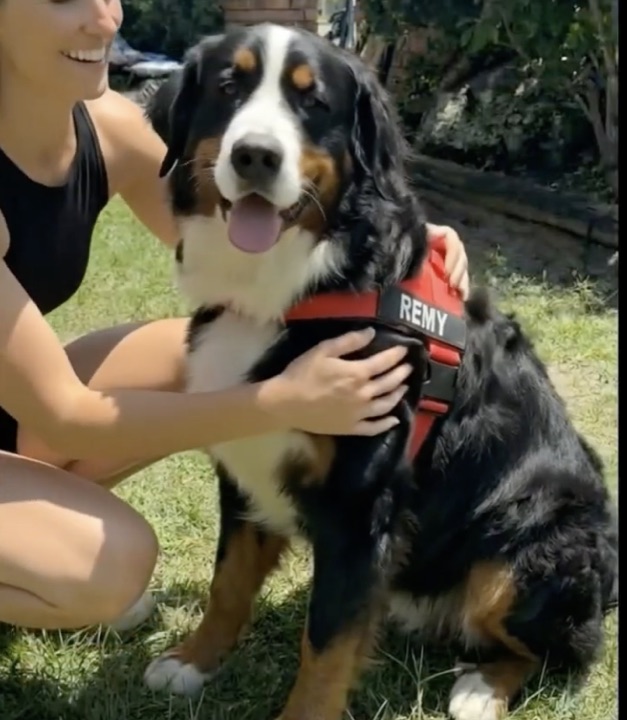
- Personalize With Your Dog's Name
30-Day Returns From Delivery
90-Day Warranty On Stitching & Hardware
See The Harness · From $39.95
90-Day Warranty On Stitching & Hardware
Free US Shipping | 30-Day Returns | 90-Day Warranty